All posts by Davida Breier

A Unicorn of a Work Trip

We interrupt our Ireland trip for a quick jaunt to the Caribbean.

Sunrise, Montego Bay

As we’ve mentioned before, we both travel for work. In fact, a work trip was the impetus for starting this blog. Often times we’re in detail-less conference halls in face-less cities and we make the best of the time by exploring early in the morning and the few hours after we arrive and before we leave. Only once in my career have I been presented with a work trip that elicited the response, “Are you serious?” That was this trip.
Room with a View
Room with a View

And so it was that WPT (thanks to frequent flyer miles) and I found ourselves at an all-inclusive resort in Jamaica. I was initially dubious, but I looked at the costs and compared them to the same meeting, held in San Antonio, the previous year. The all-inclusive rates and direct airfare were actually cheaper than going to Texas. Huh.

The beach was literally a 90 second walk from the room.
The beach was literally a 90-second walk from the room.
Swim up bar and the horizon pool.

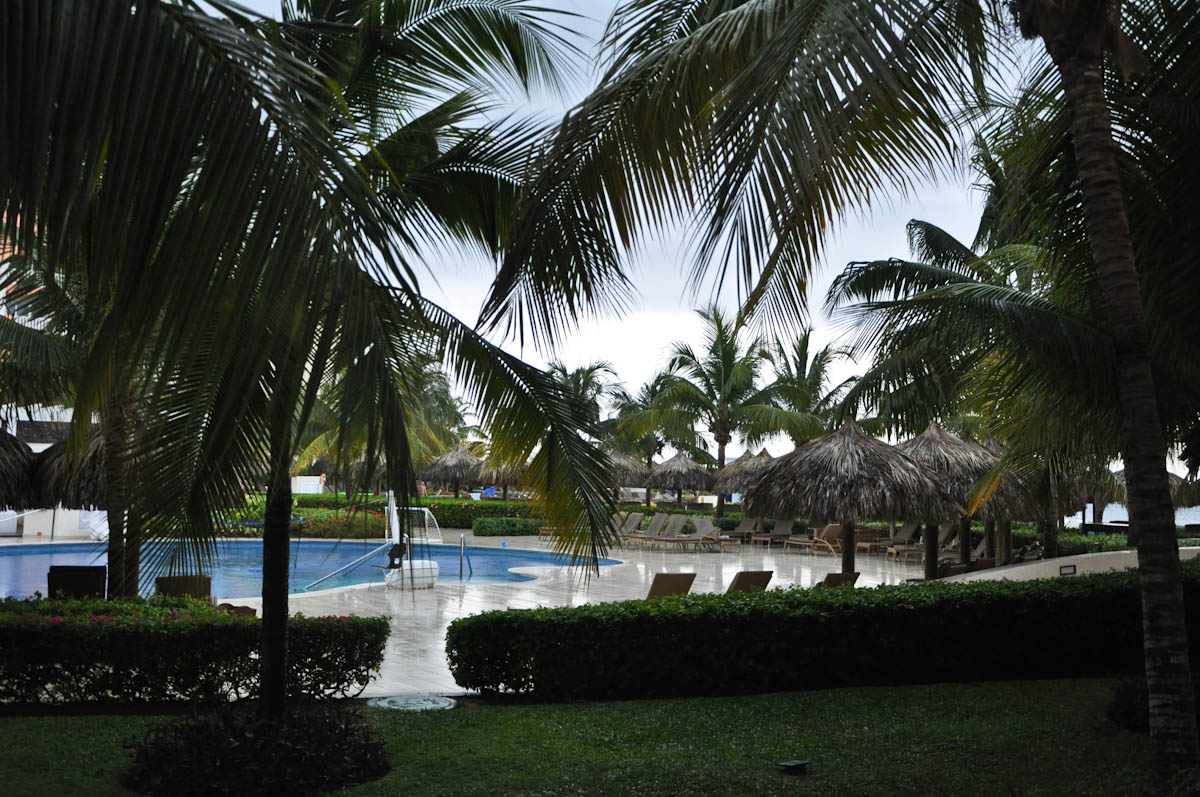
We stayed in Montego Bay, at Iberostar’s Rose Hall Suites, and had a room (with a small porch) that overlooked the pools on the first floor. The ocean was literally right outside our door and I went to every single work obligation with wet hair. In fact, we had a 30 minute break after lunch one day and I managed to go from business suit to swimsuit and back again in that time.
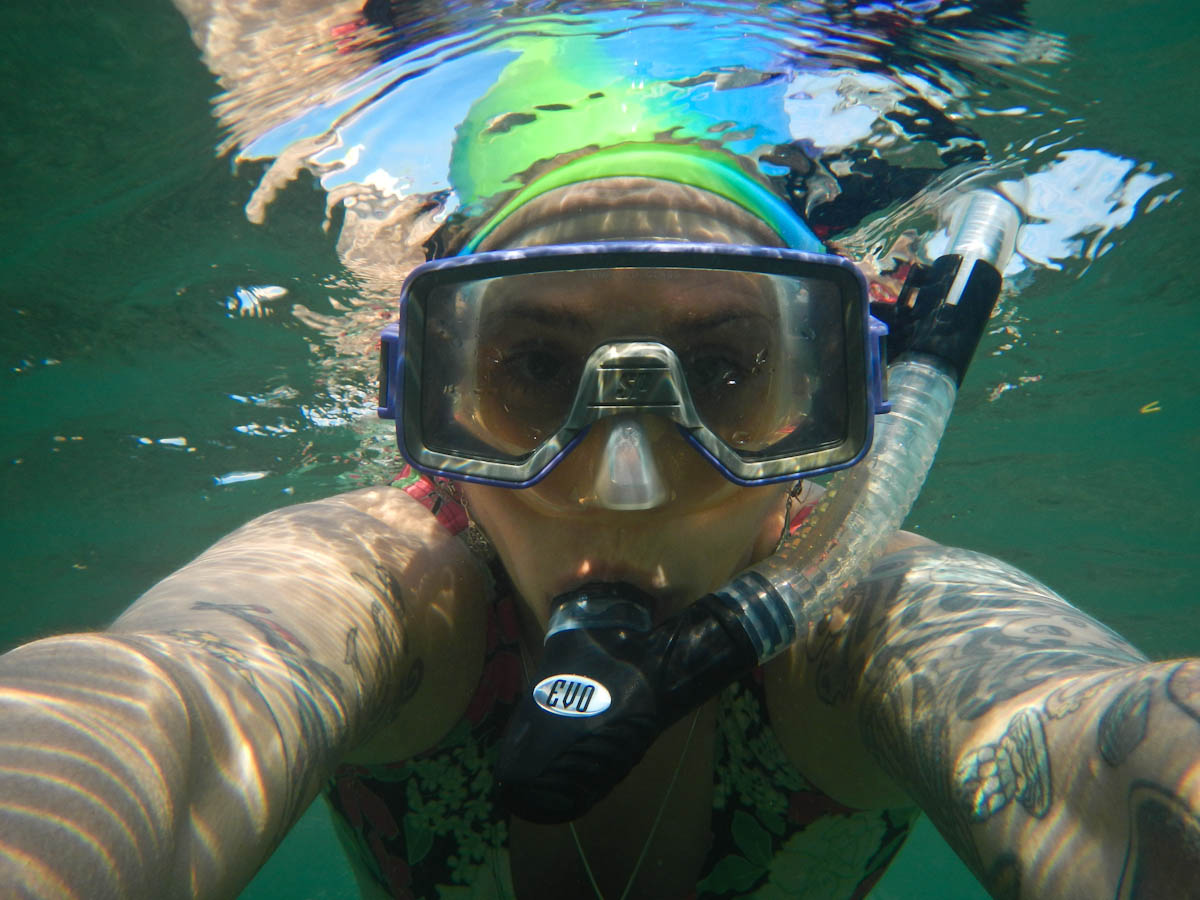
I showed up to meetings with mask marks on my face. Repeatedly.

We usually prefer travel that is under our control and allows us to see the real place and people and not what the tourism board (if there is one) promotes. We relinquished the reins this time and just let the resort do what it does best – take care of its guests and present an appealing artifice.


That's my boss waving at me in the lazy river. Thanks for letting me go to Jamaica, boss!
That’s my boss waving at me in the lazy river. Thanks for letting me go to Jamaica, boss!
Lazy river. An excellent choice after coffee with coffee liqueur.

The buffet restaurant catered to vegetarians fairly well and was accommodating when they heard I was vegan. I pretty much lived on potatoes, plantains, and rice for the days we were there. At night and in the rain the local frogs sang, which delighted me. Also, there’s a lot to be said for someone showing up at your door at 9pm and offering you chocolate before bed.

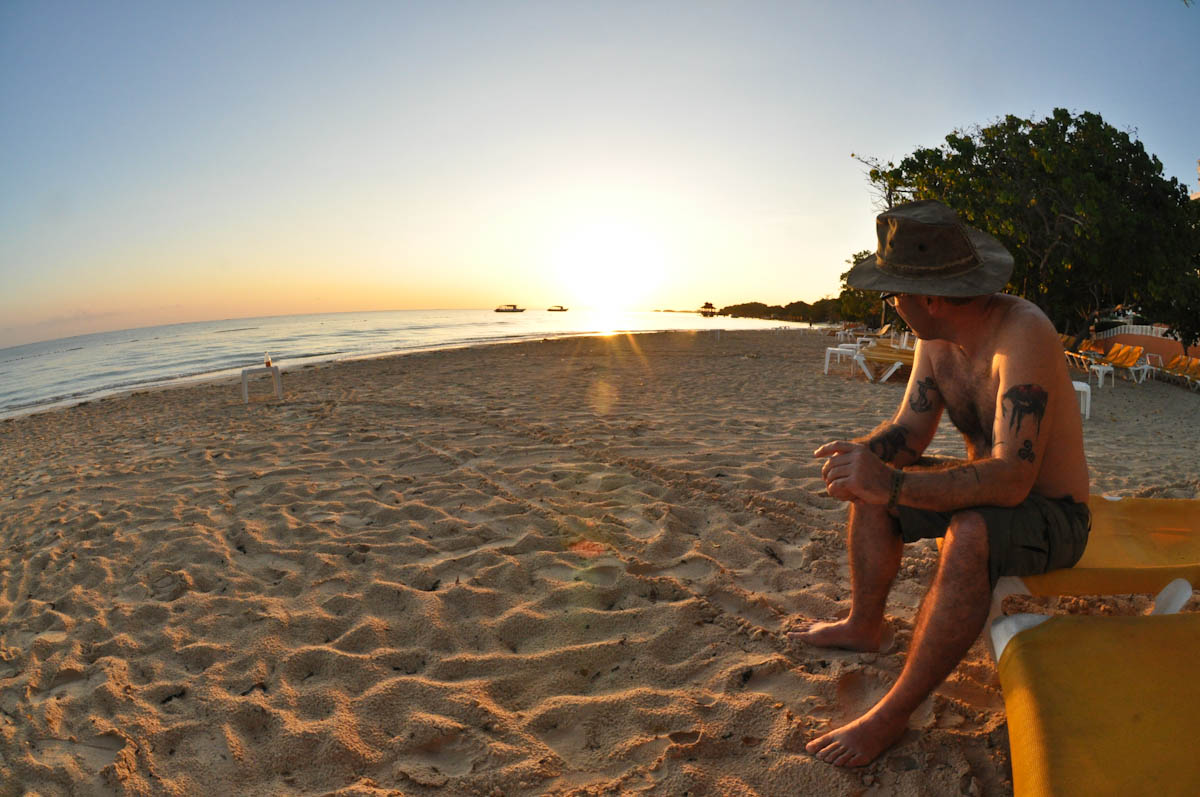
Captain Tandy
Captain Tandy (that’s the resort behind him)
Sunrise. Sunrise. Sunrise.

From what I could see, many people come to these resorts to bring home third degree burns and drink the bottom-shelf liquor. To each their own. We learned early on to ask for the top shelf and it would be served in a brimming glass. I highly suggest the coffee with the coffee liqueur. It is especially delicious when sipped during a meeting. Working!

Mobile souvenir shops,  one of the early morning denizens
Mobile souvenir shops, one of the early morning denizens
Ghost crab, another early morning denizen
Wee ghost crab, another early morning denizen

I was surprised by how few people came out to the beach for sunrise. That’s the best part of the day! Plus, by getting up early I was able to get in almost an hour of snorkeling each morning (we brought our own fins and masks). Once I was done with work we took out a small catamaran and then went out on a snorkel charter to the deeper reef. The small artificial reefs in front of the hotel weren’t bad, but the deeper reef had older, bigger corals and older fish. It was the first time we’ve ever had an actual guide snorkeling and free diving with the tour group. I absolutely loved being in the water there and will do a separate post with underwater photos.
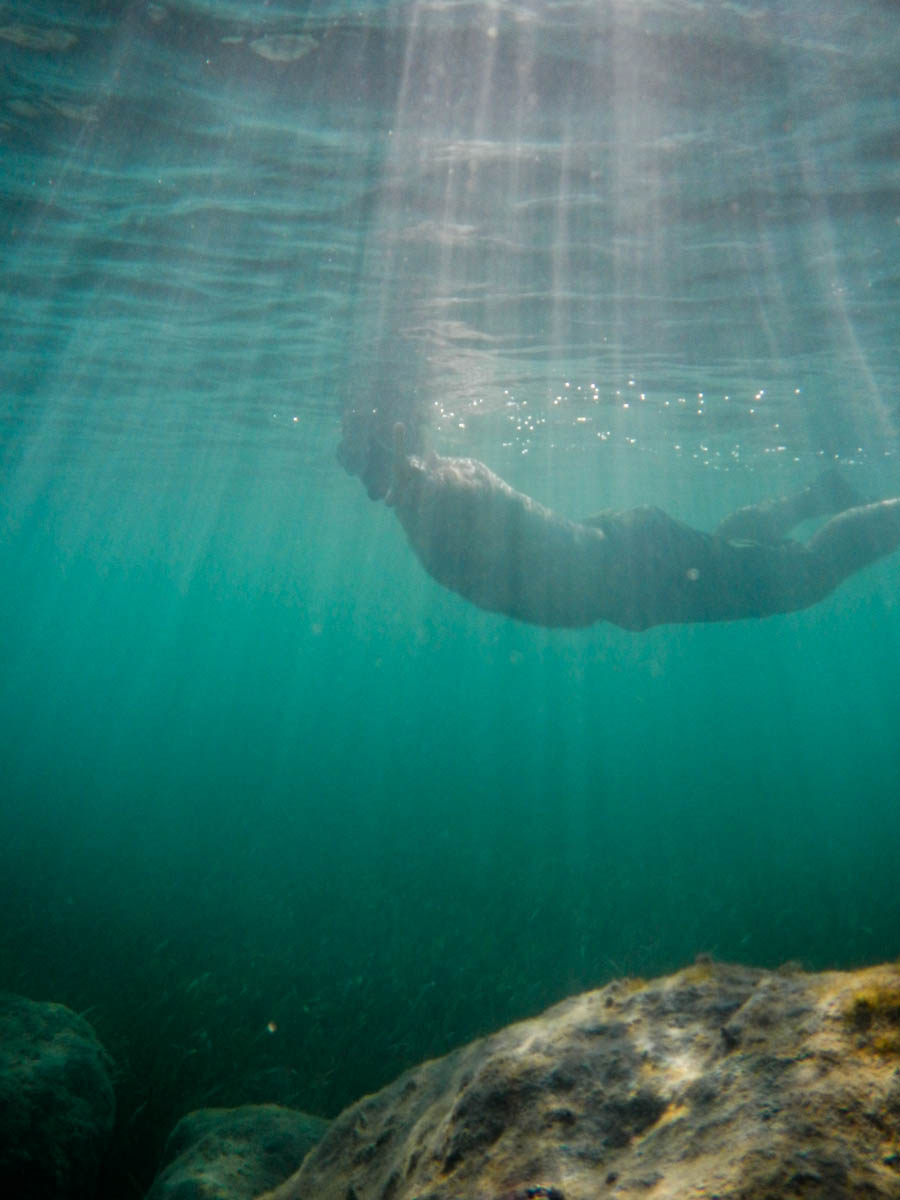
WPT being beamed up to his home planet
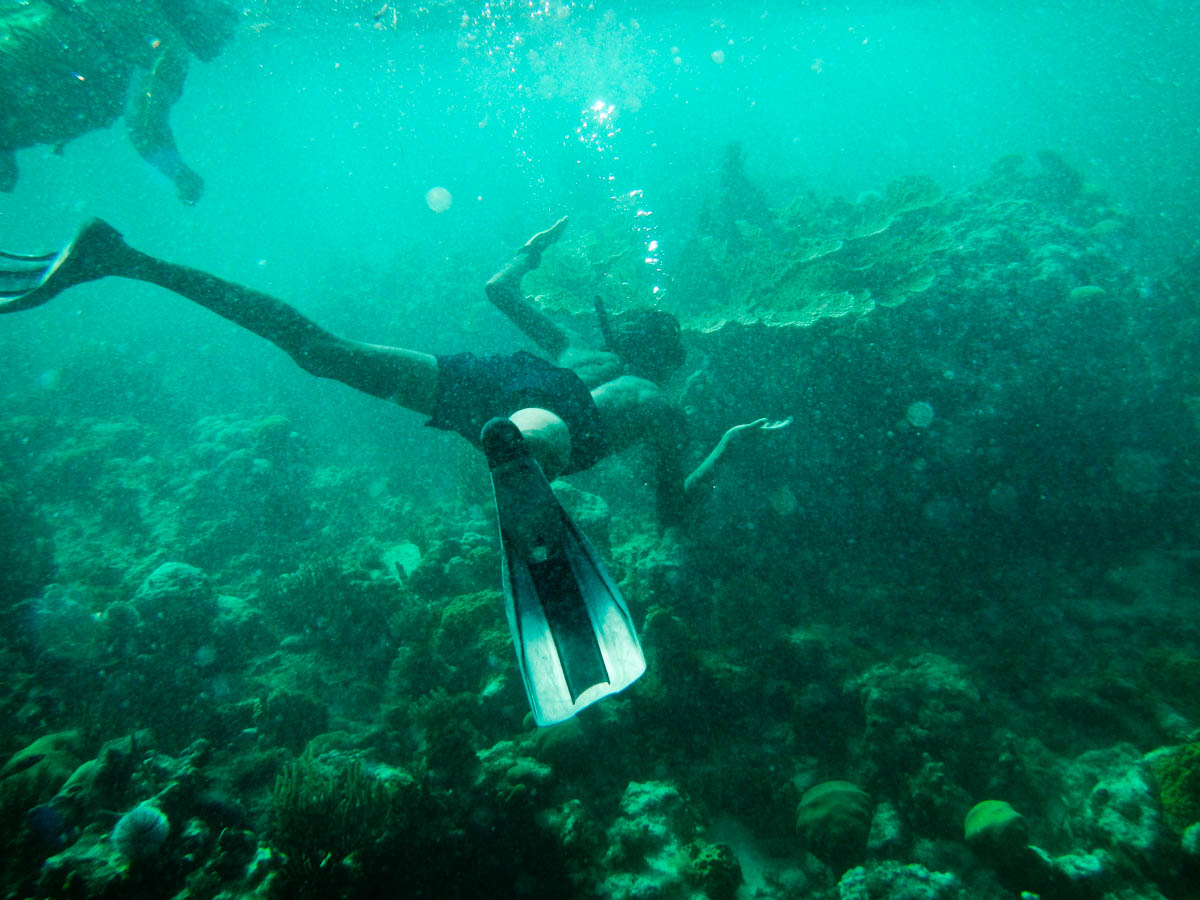
Snorkel guide
Snorkel charter guide

Our final morning we got up early for sunrise and then swam the small artificial reefs looking for the young eagle ray WPT had seen the day before (he was able to swim and sail while I was in meetings, the lucky bastard). After patrolling the three small artificial reefs and swimming with many schools of juvenile fish I feared I wouldn’t get to see the ray. I saw a large stingray and was prepared to be content with that. Then the young eagle ray appeared and swept by us with a grace that is unmatched by any other animal. Those are the travel moments I live for.

Young eagle ray
Young eagle ray
Sunrise again, because waking up never gets old!

All-inclusive resorts dissuade you from thinking about much other than where you want to swim and what you want to drink. You find yourself playing water volleyball with your boss or having shirtless conversations with colleagues (him, not me) and that is perfectly normal. And then it is time to return home. We walked into the Montego Bay airport and it was like the interest for not feeling stressed for three days quadrupled. Lines everywhere. Chaos. Sunburned, confused, drunk, and hungover people as far as the eye could see. Confusion in at least four languages. Eventually we checked our bags and entertained ourselves by watching people walk through the doors and seeing expressions we wore not long before playing across their faces. I thought perhaps it was just a new experience for me, but a colleague traveling on the same flight said that he had traveled the globe and had never seen a line like this. We made it through security and to our gate in time and if anything the experience was more amusing than frustrating. Jamaica032015-1588 I have no idea what Jamaica is really like, other than the ocean, but the ocean is what will draw me there again.

Youghal Come Back Now

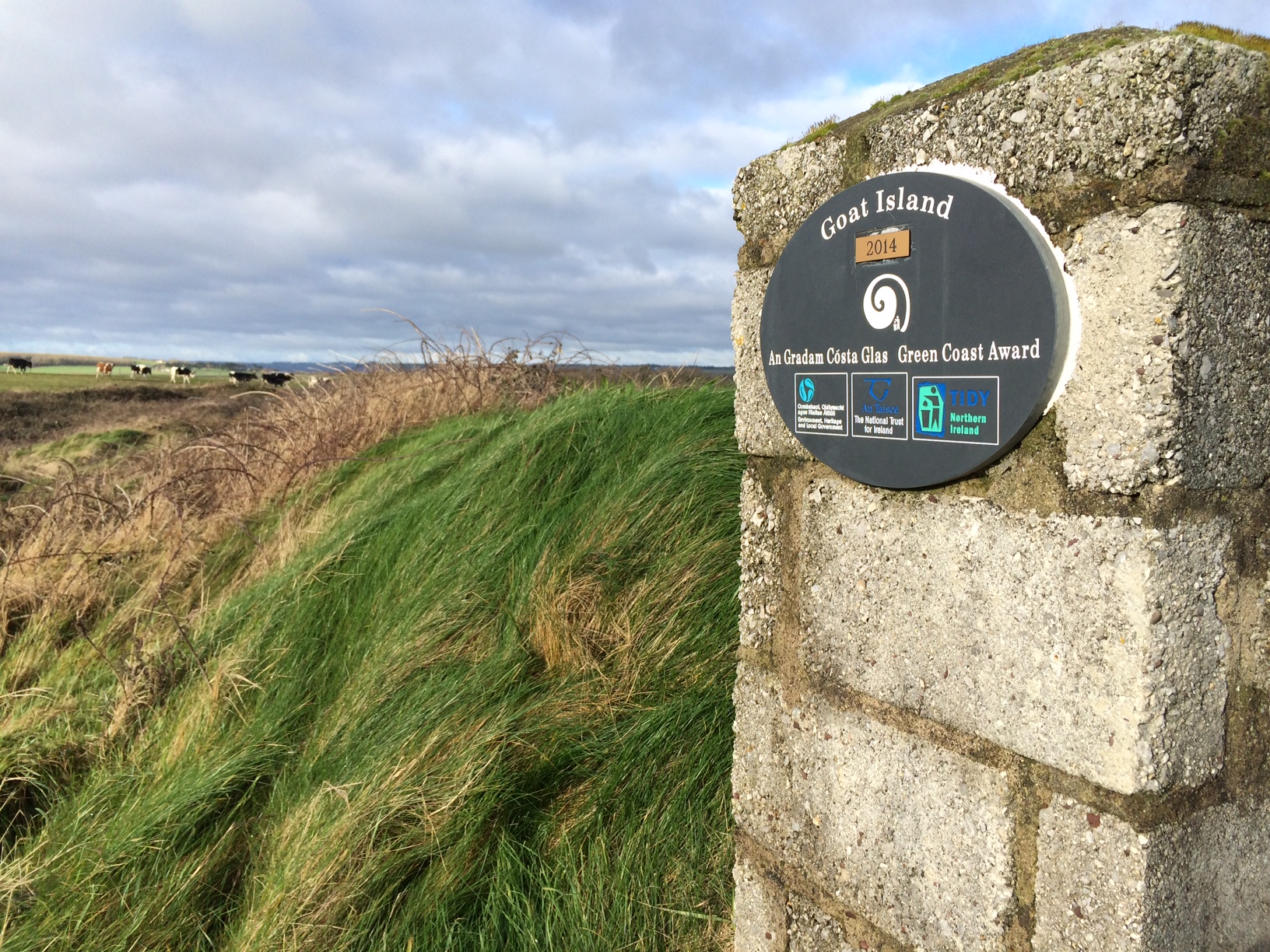
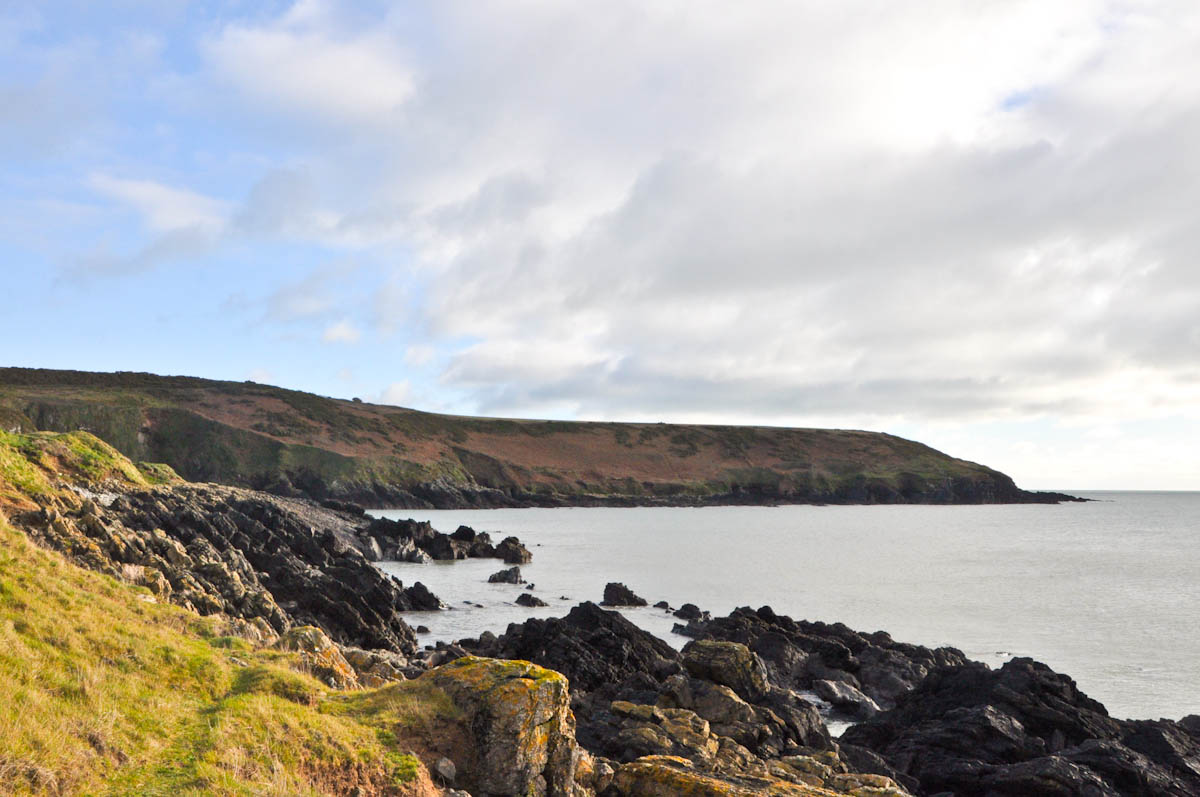
Goat Head Island
Goat Island

I was unemployed. Davida was underemployed.

Looking back, we had no business going to the UK. But I’ll always be glad that we did, for that first trip together, in January 2000, proved just the start of a now 15-year journey.

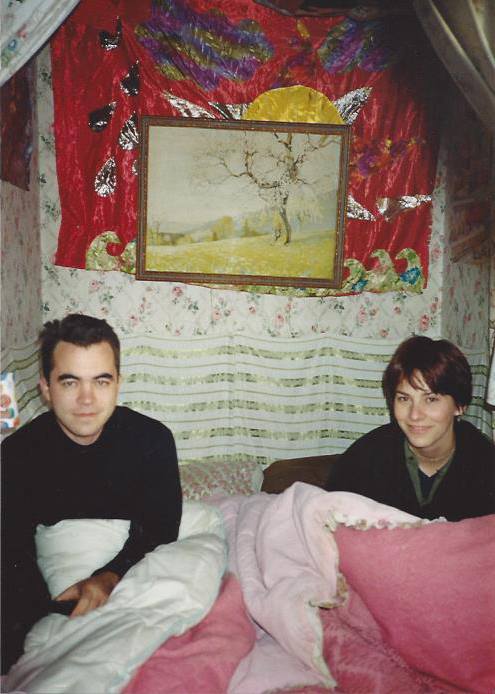
Another part of the underlying magic of that first trip was the friends that we made. Our first three nights we stayed with zinester friends, Rachael and Jo, in southeast London whose flat – the converted chapel of a former school, adorned with everything from 70 years worth of toy robots to Trashwomen ephemera – remains to this day my all-time favorite dwelling. From London we headed south to Hove, a suburb of Brighton, where we stayed with friends of Rachael and Jo, in a cold-water squat without heat. So cold was the house that, when I got up to pee in the middle of the night, the cold porcelain produced an instantaneous cloud of steam. Yet another zine-friend put us in touch with a friend of his, a most gracious pensioner with whom we stayed the next night, in her posh house in Hastings.

The Room Bed, Hove squat (January 2000)

Meeting locals always adds another layer of excitement to travel, one you would never otherwise experience. You learn of places and things and customs exclusive of any travel guide. And if you’re lucky, you gain a new friend from it. Zine connections are often particularly fertile given the automatic shared interests. And so, for these reasons, we looked forward to meeting yet another friend of a friend during our trip to Ireland.

The road to Youghal
The road to Youghal

Anto, his wife, Aine, and their two young sons live in Youghal, a seaside town about a half-hour’s drive east of Cork, on Ireland’s southern coast. He and Davida had been in touch via email before our trip, and with a quick phone call on the road from Dublin we arranged to meet not far from their home.

Sunset in Youghal
Sunset in Youghal

Quickly proving to our mutual satisfaction that neither of us was creepy or conservative, Anto invited us back to his house. There, we met Aine and the boys, with whom our son happily played despite a few years difference in age. Aine prepared an impromptu dinner, after which we retired to their living room.

The boys cavorted and Anto played records while the four adults talked of everything from parenting to zines to travel to politics to our shared love for the ocean. The single bottle of wine they had on hand didn’t go far, so Anto and I drove to a local supermarket, where I made sure there would yet be wine in their cupboard after we left. On the short ride to and fro Anto pointed out local landmarks like the Clock Tower Gate, in downtown Youghal, which housed prisoners during the Irish rebellion of 1798.

Back at the house, Anto and Aine invited us to stay the night. We gratefully accepted, and we all spent the rest of that evening talking and drinking wine by the fire, while Anto spun Irish records and we talked of our favorite music. Later in the evening, he gave me a Dubliners record to take home. When we went to bed, hours later, it was to allow our curious young one to finally sleep.

Goat Head Island
Goat Island Beach
Goat Head Island
Goat Island Beach

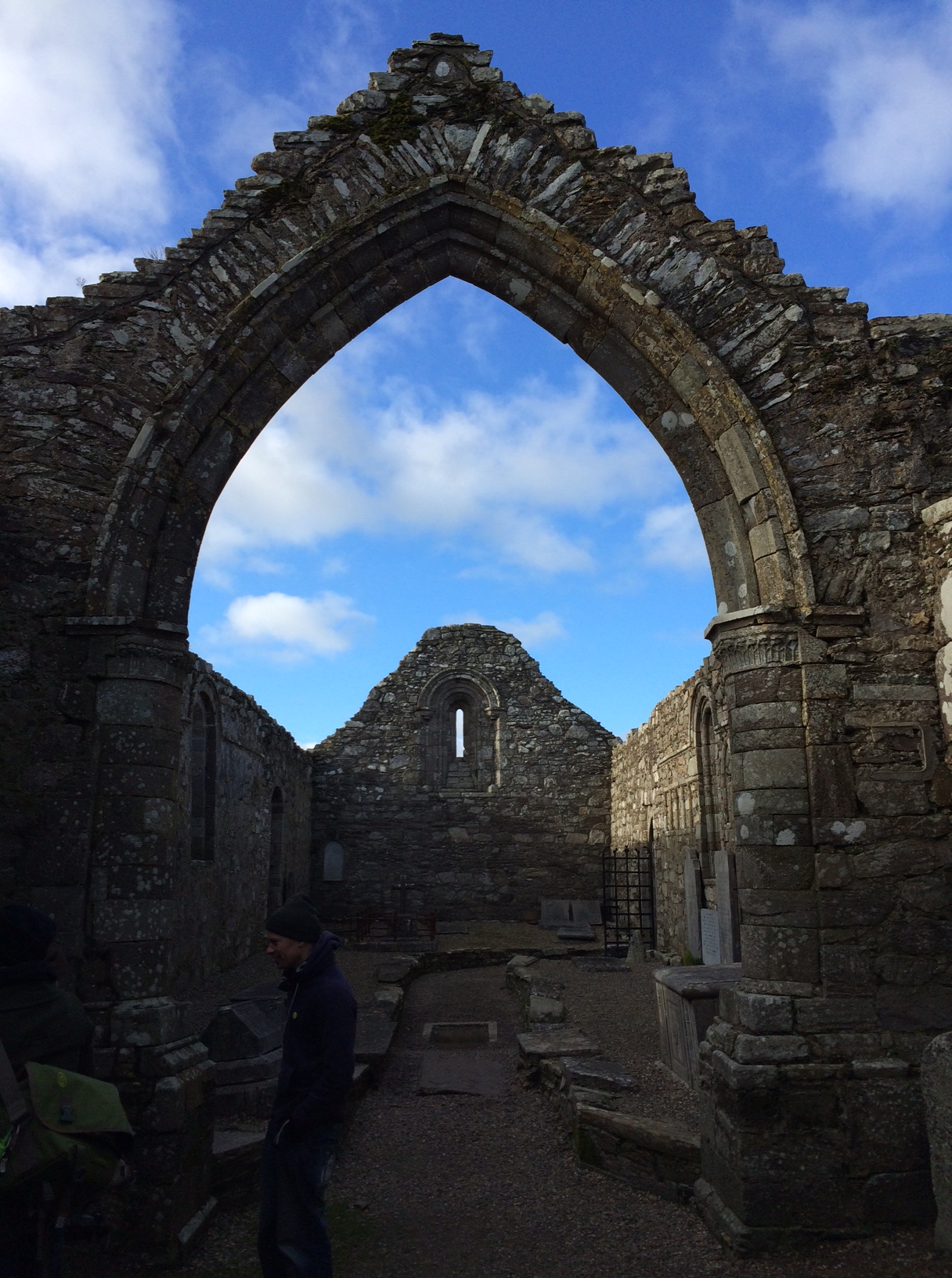
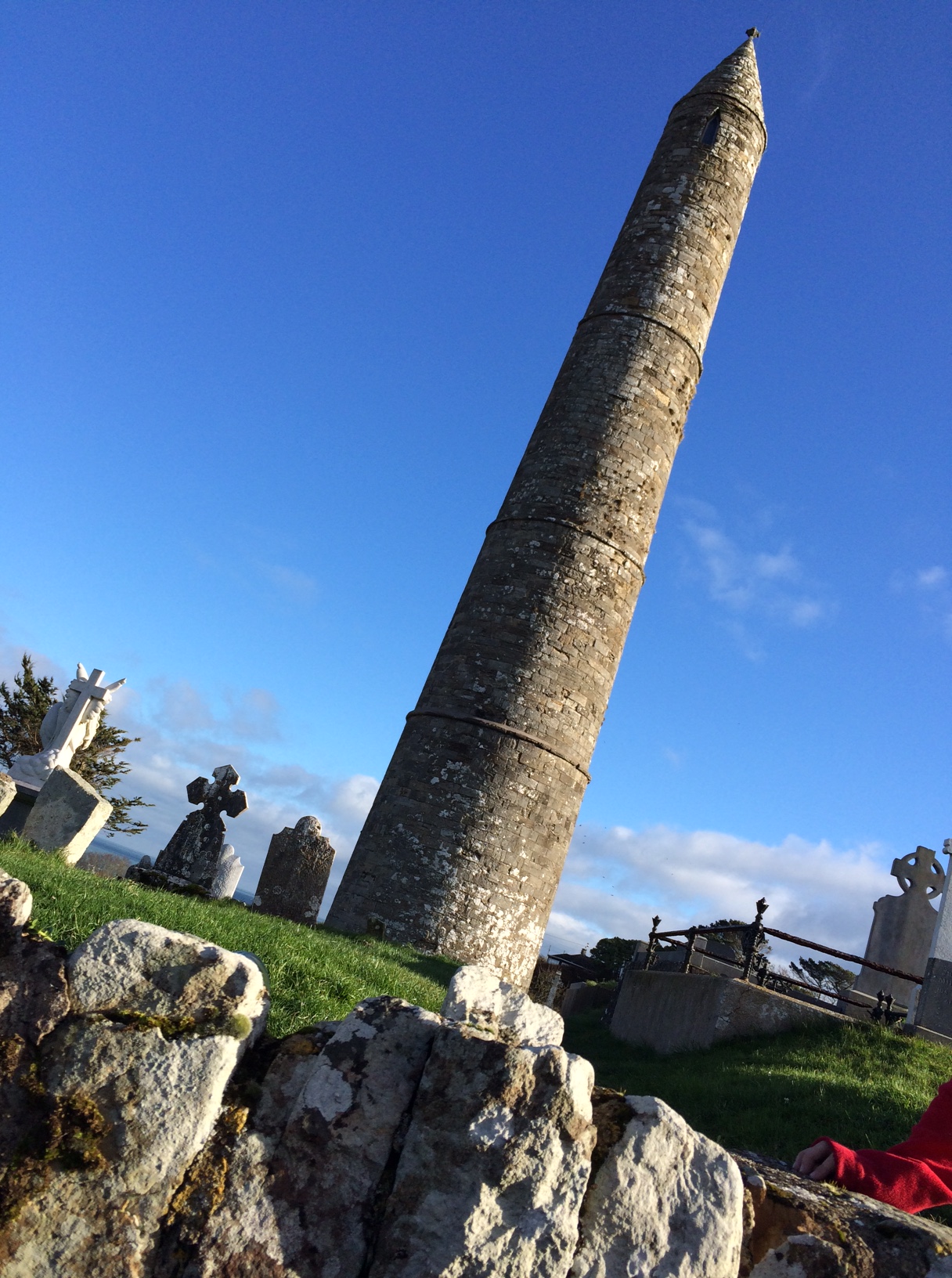
The next morning, after a hearty breakfast of Irish porridge, we piled into the cars and drove to Goat Island Beach, a favorite destination of theirs, in nearby County Waterford. The frigid wind did nothing to dissuade Anto from stripping down to his swim trunks and going for a dip in the cold sea. He and Aine also introduced our son to Irish sport of hurling, while Davida and I explored the rocky, majestic coastline. Afterward, they took us to the 13th-century ruins of Ardmore Cathedral. Anto pointed out the adjacent 9th-century stone round tower, used by local monks to protect their valuables from marauding Norsemen.

Anto swimming (in January)
Ireland-0252
Goat Island Beach
Ireland-0266
Goat Island Beach

While the three of us would have gladly spent the rest of the weekend with our new-found friends, the road beckoned. Our plans called for us to be in Killarney that night, and to ensure time enough to see everything we wanted to, we reluctantly bid our hosts goodbye.

Ireland-0290
13th-century ruins of Ardmore Cathedral
IMG_7610
13th-century ruins of Ardmore Cathedral
IMG_7603
13th-century ruins of Ardmore Cathedral
IMG_7594
9th-century round tower amid the 13th-century ruins of Ardmore Cathedral
IMG_7592
9th-century round tower amid the 13th-century ruins of Ardmore Cathedral

But Anto and Aine’s hospitality and generosity left an indelible impression on us for the rest of the trip, and beyond. I’ve played that Dubliners record countless times since returning home, while Davida has worked to replicate the delicious pasta dish Aine prepared for us. And we’ve both been reading his zine, Loserdom.

One day we will go back, while we’ve made it well known to our Irish hosts that they will always have a place to stay in Baltimore should they ever venture stateside. For now, I can’t help thinking that, but for 3,000 miles of interfering water, we would all likely spend time together.

The Donkey Sanctuary

The Donkey Sanctuary

As we planned the trip to Ireland, the short list of places I wanted to visit included:

  • The Leprechaun Museum (which WPT has already written about)
  • The Giant’s Causeway
  • Ashford Castle (a filming location for the final episodes of Remington Steele)
  • The Donkey Sanctuary

(That list evidently proves that I am 12 years old.)

The Donkey Sanctuary

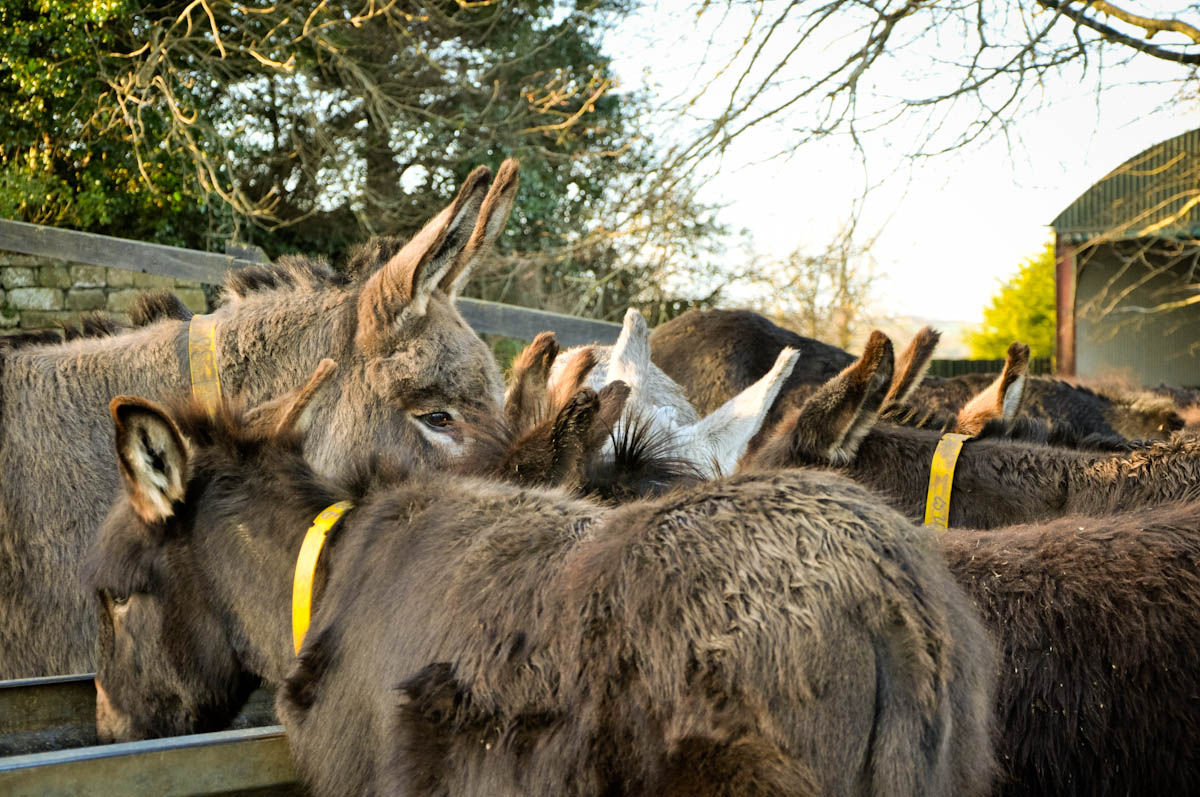
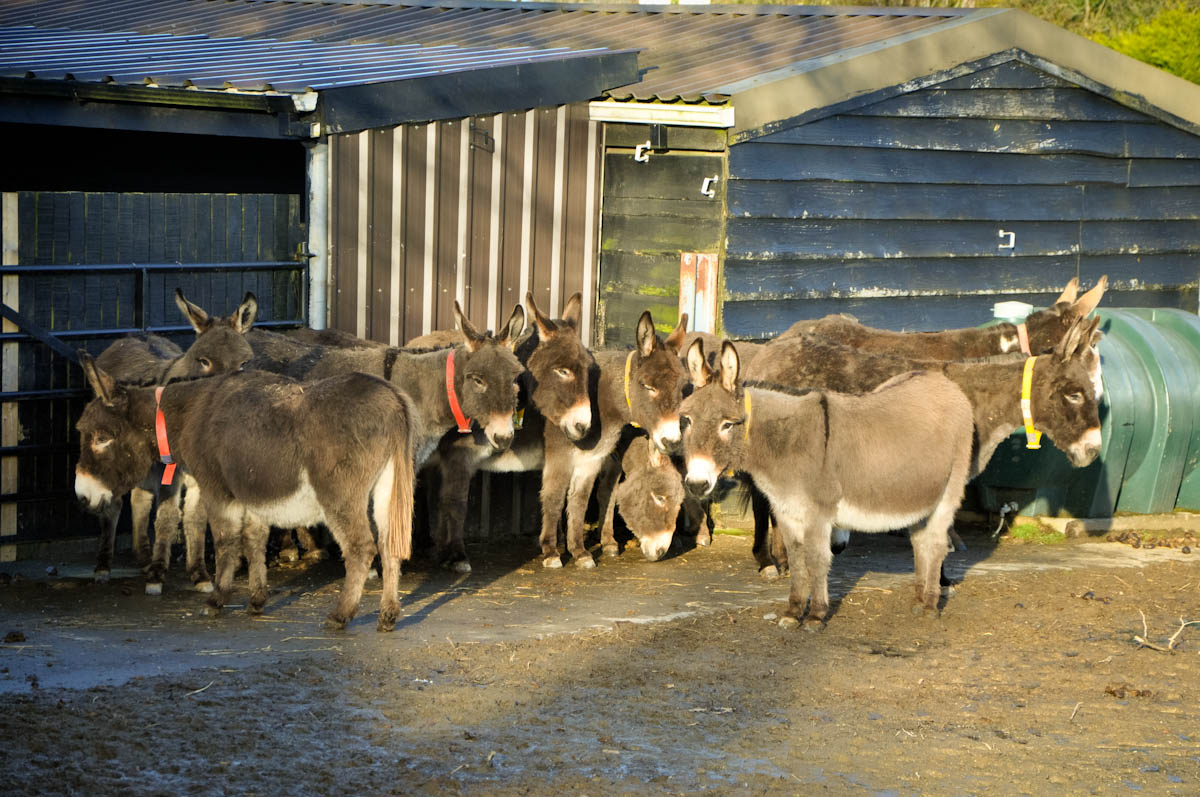
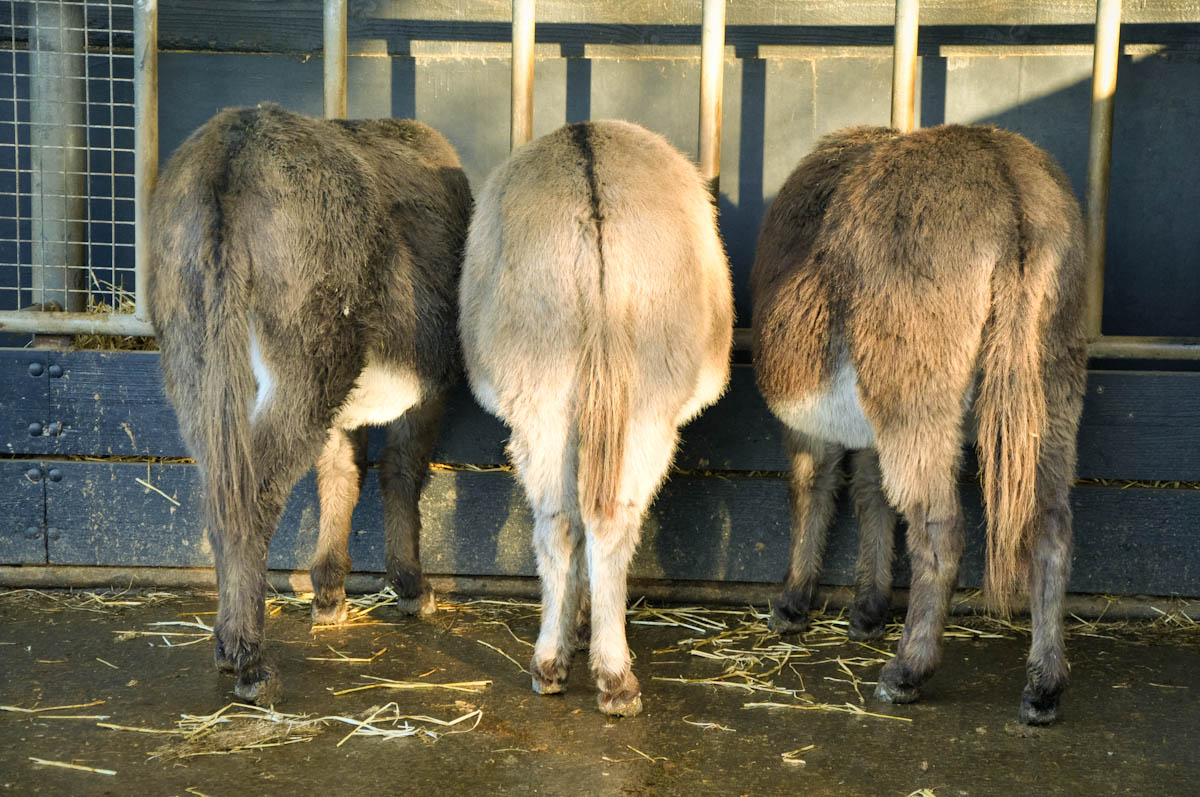
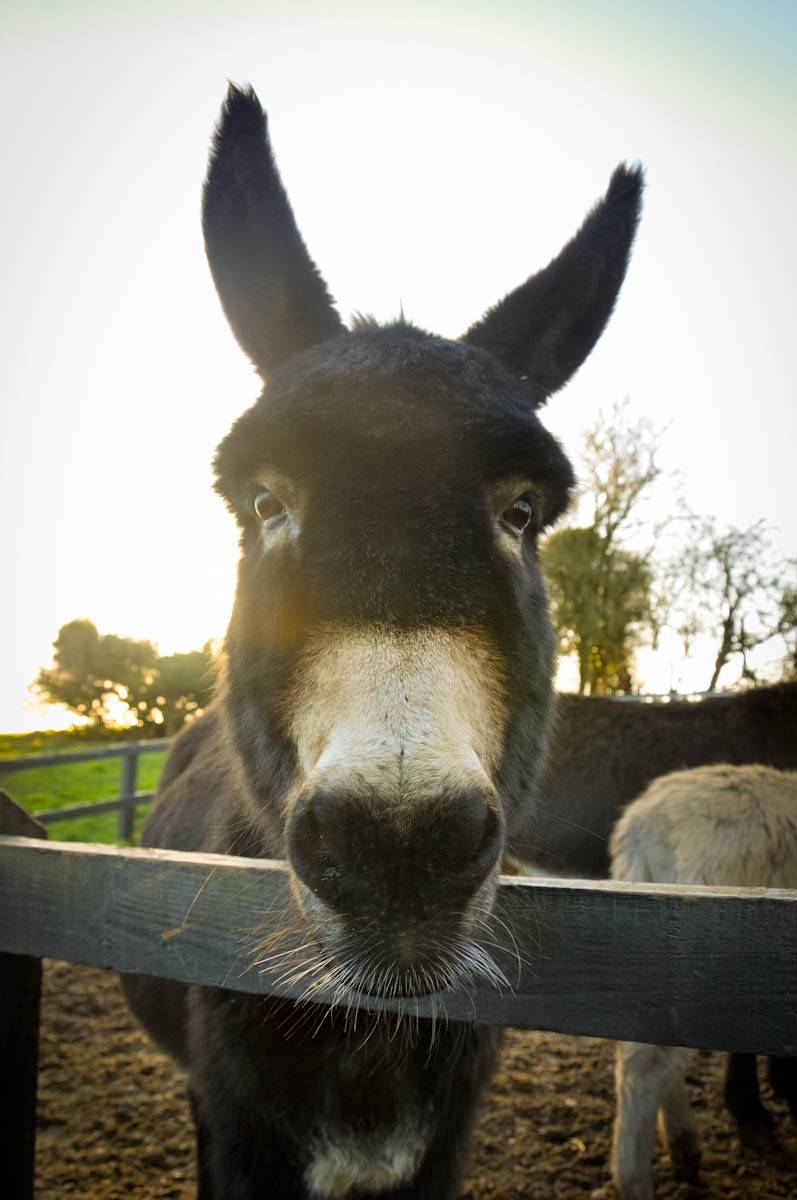
When I travel I like to visit animal sanctuaries, particularly ones devoted to farmed animals, and I was thrilled to learn of The Donkey Sanctuary. Located near Mallow, just north of Cork, it was roughly on the way from Youghal to Killarney, so we made plans to visit.

The Donkey Sanctuary

The Donkey Sanctuary is part of an organization based in the UK, which became affiliated with a donkey rescue center in Ireland in 1987. In addition to providing rescue services and a home for donkeys in need, the sanctuary also provides education and training to the benefit of donkeys and their caregivers. Over 4,000 donkeys been rescued since the charity was formed, with 388 rescued in 2014.

The Donkey Sanctuary

In addition to visiting the sanctuary and providing monetary support, you can symbolically adopt a donkey and if you are in Ireland and so equipped, you can also provide foster support and adopt.

The Donkey Sanctuary

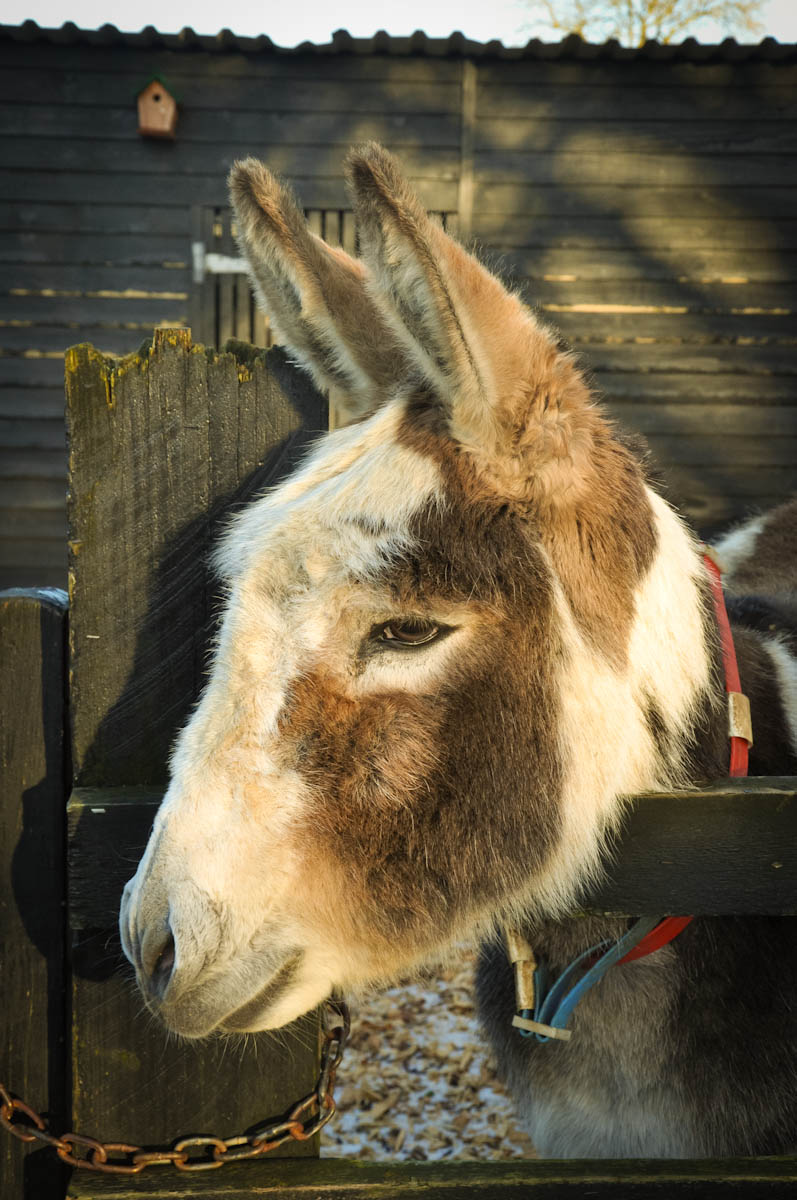
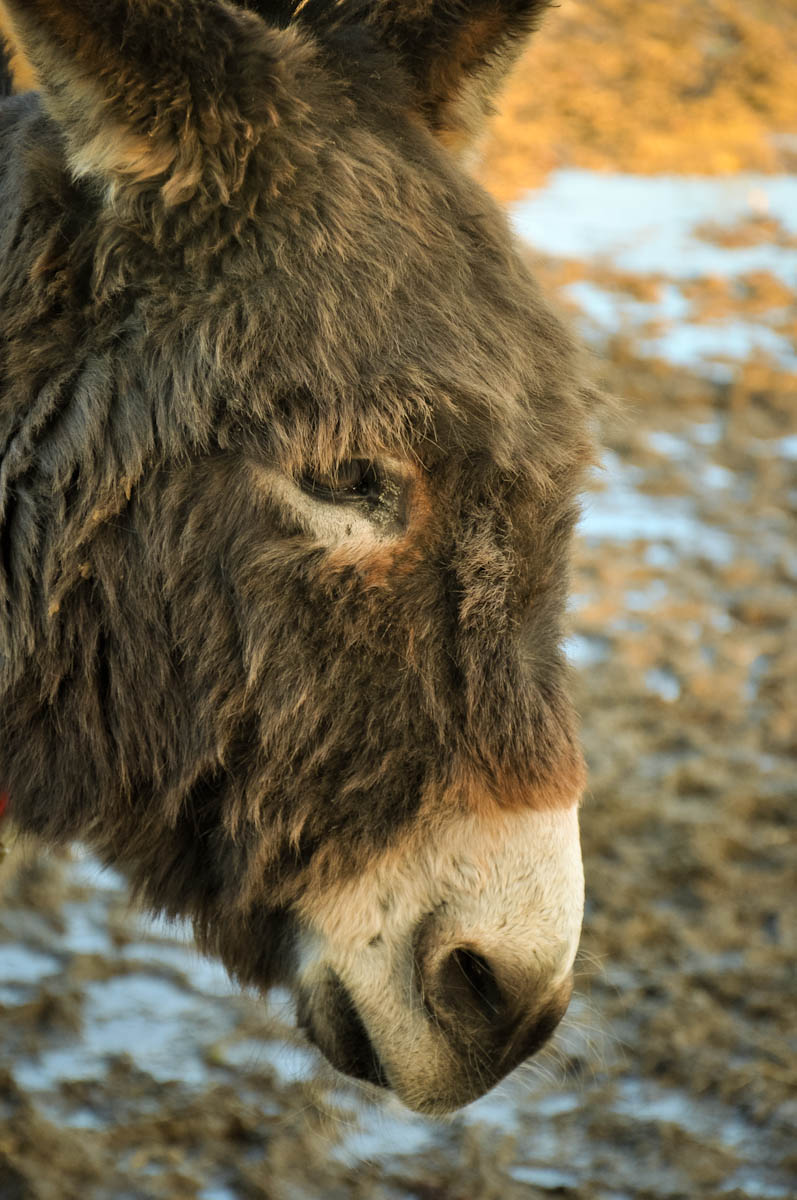
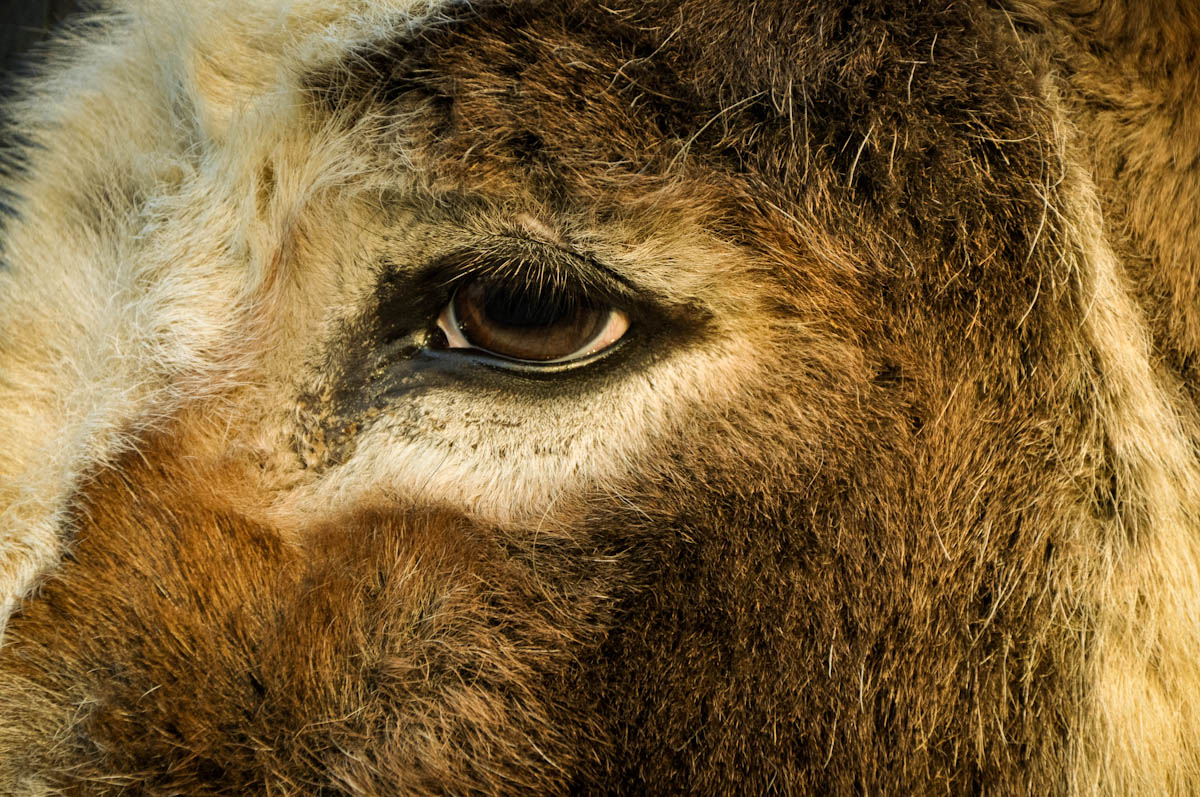
I was charmed by many of the donkeys I met and completely smitten by one who was keen to nuzzle a stranger. So charmed that I now dream of coming home to a wee donkey.

The Donkey Sanctuary

The Donkey Sanctuary
Liscarroll, Mallow, Co Cork, Ireland
Phone: +353 (0) 22 48398
Website: http://www.thedonkeysanctuary.ie
Facebook: https://www.facebook.com/TheDonkeySanctuaryIreland
Admission: Free; free parking
Hours: Monday – Friday: 9 AM – 4:30 PM, Saturday–Sunday and Bank Holidays: 10 AM – 5 PM

The Donkey Sanctuary

Not for the Faint of Mind

“That’s a real writer, with the true comic spirit.
– James Joyce’s summation of At Swim-Two-Birds

Flann O'Brien
Flann O’Brien

While I respect his rightful post in the pantheon of Irish letters, James Joyce, frankly, never really captured my interest. And to this day, I cannot really say for certain why. Perhaps it’s because so overbearingly much has been made of Joyce over the last century, often at the expense of other Hibernian talents. But the sentiment more likely parallels the way I feel wandering the beer-soaked streets of old Key West: it isn’t Jimmy Buffett himself that I dislike so much as his fans, the lobster-colored “parrotheads” who seldom venture beyond the din and glitter and margarita-puke of Duval Street; in so doing, two centuries of local character eludes them.

Of Irish authors, Flann O’Brien – real name Brian O’Nolan – has long been among my favorites. English novelist Graham Greene (another favorite) praised O’Brien’s first novel, At Swim-Two-Birds, upon its publication in 1939. And Dylan Thomas famously praised it as “just the book to give your sister, if she’s a loud, dirty, boozy girl!”

A metaphysical joyride, At Swim-Two-Birds concerns a lazy college student who, rather than go to class, holes up in his uncle’s house and begins work on a novel about an innkeeper named Trellis. Trellis himself is working on a novel that, shirking redundancy by recycling pre-existing literary characters that fit the bill rather than creating new ones, is populated with the likes of the mythological warrior Fionn Mac Cumhaill and the inhabitants of a Western dime novel. To keep this feisty cast in line, Trellis keeps them locked away in his inn. But when they take exception to being written into some rather unsavory situations, they decide to rebel against their would-be author.

Joyce’s influence on the young O’Brien cannot be understated. But O’Brien followed his own postmodern path, and today, more than 70 years later, his debut novel remains not for the faint of mind.

Unfortunately, At-Swim-Two-Birds sold so poorly (about 250 copies) upon its publication that the disheartened O’Brien shelved his next novel, another metaphysical masterpiece called The Third Policeman, altogether; it would not see the light of day until a year after the author’s death. (The Third Policeman, and O’Brien, found an unprecedented surge of interest when the book was featured in an episode of the television series Lost in 2005.)

However, O’Brien’s limited success as a novelist hardly curtailed his writing habit. Indeed, the writer spent the next quarter-century writing a regular column called “Cruiskeen Lawn” for The Irish Times under the pseudonym Myles na gCopaleen. In this forum, the mild-mannered O’Brien’s talents flourished as he at once celebrated and skewered “The Plain People of Ireland” and all that they held dear – sometimes going so far as to respond to outraged letters to the editor that, in fact, O’Brien had penned himself pseudonymously.

When complications from cancer and decades of alcohol abuse claimed the life of Brian O’Nolan in 1966, they silenced not only a 54-year-old career civil servant, but also a vociferous melange of some of modern literature’s most ignoble, cranky, fantastical, and perversely sanctimonious characters.

* * *

The verdant sprawl of Deans Grange Cemetery lies just across the road from a car dealership in a busy South Dublin suburb in which most tourists would at best find themselves by accident. Its stones, both new and ancient, invite exploration, even in the bitter cold of a January morning.

Dead people, as far as the eye can see

The woman behind the counter of the little cafe at the cemetery’s main entrance confirmed that Flann O’Brien enjoys the “deeper and more refined sleep” mentioned in the pages of At Swim-Two-Birds within the grounds of Deans Grange. However, precisely where in that 70-acre necropolis he was she wasn’t sure. Then the helpful lady handed over a book from a nearby shelf – a guide to burial sites around Dublin – and welcomed me to try to suss it out myself.

IMG_7392

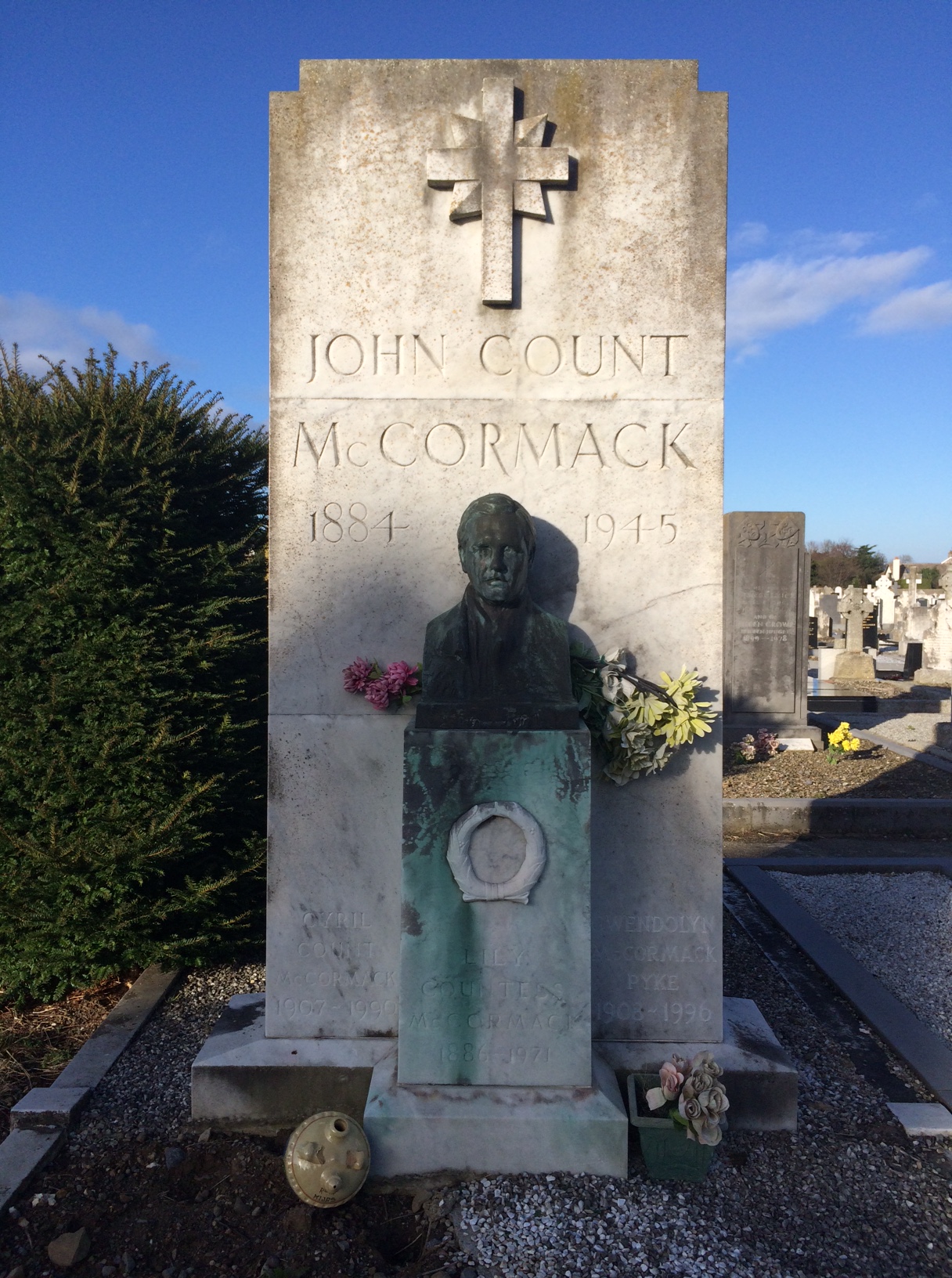
Sure enough, it listed O’Brien among two or three dozen of the cemetery’s most notable decedents, which include the great Irish tenor, John McCormack, the Domingo of his day. (Fans of the Pogues might recall his name from “The Sickbed of Cuchulainn”, the opening track from the band’s 1985 album, Rum, Sodomy & the Lash.) After snapping photos of every page concerning Deans Grange with my smartphone, I returned the book and thanked the woman for her help.

IMG_7419

The only problem was the frigid wind, as the guide presented itself as a walking tour of the cemetery (no doubt a pleasant prospect in the warmer months). Compounding this was the fact that directions to each grave began from the previous listing – not easily achieved in the freezing cold, nor from the warmth of a running car. And Flann O’Brien was twenty-third on the list.

IMG_7414

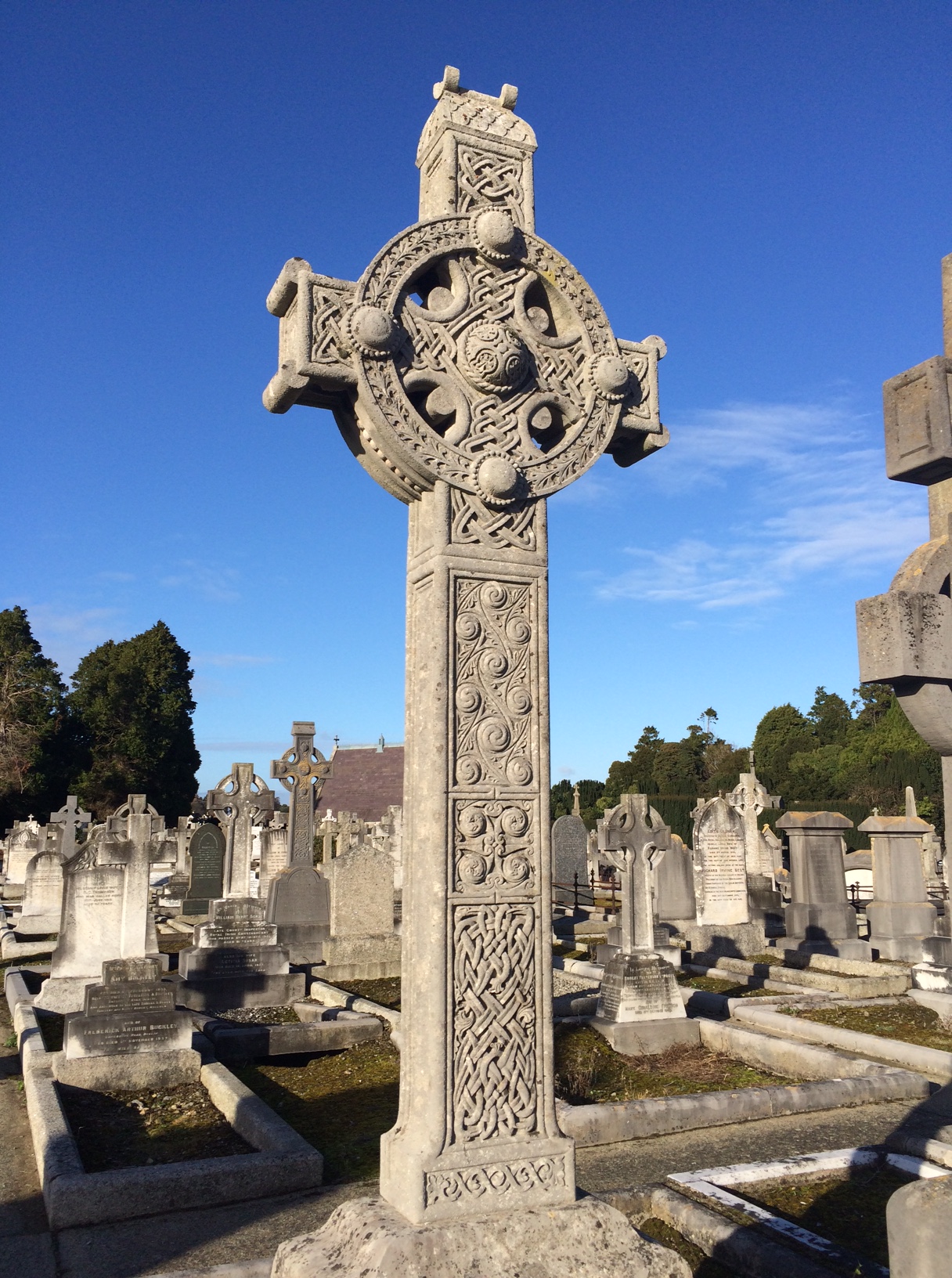
After a good deal of fruitless poking about, it was Davida who found the needle in the haystack, using clues derived from the description of the grave that preceded O’Brien’s in the book. She reasoned that that tomb – described as being, with its stone balustrade, “one of the grandest” in the cemetery – would not only be obviously large, but most likely be situated not far from the church; both, we reckoned, would be found among the older grave sites.

IMG_7442

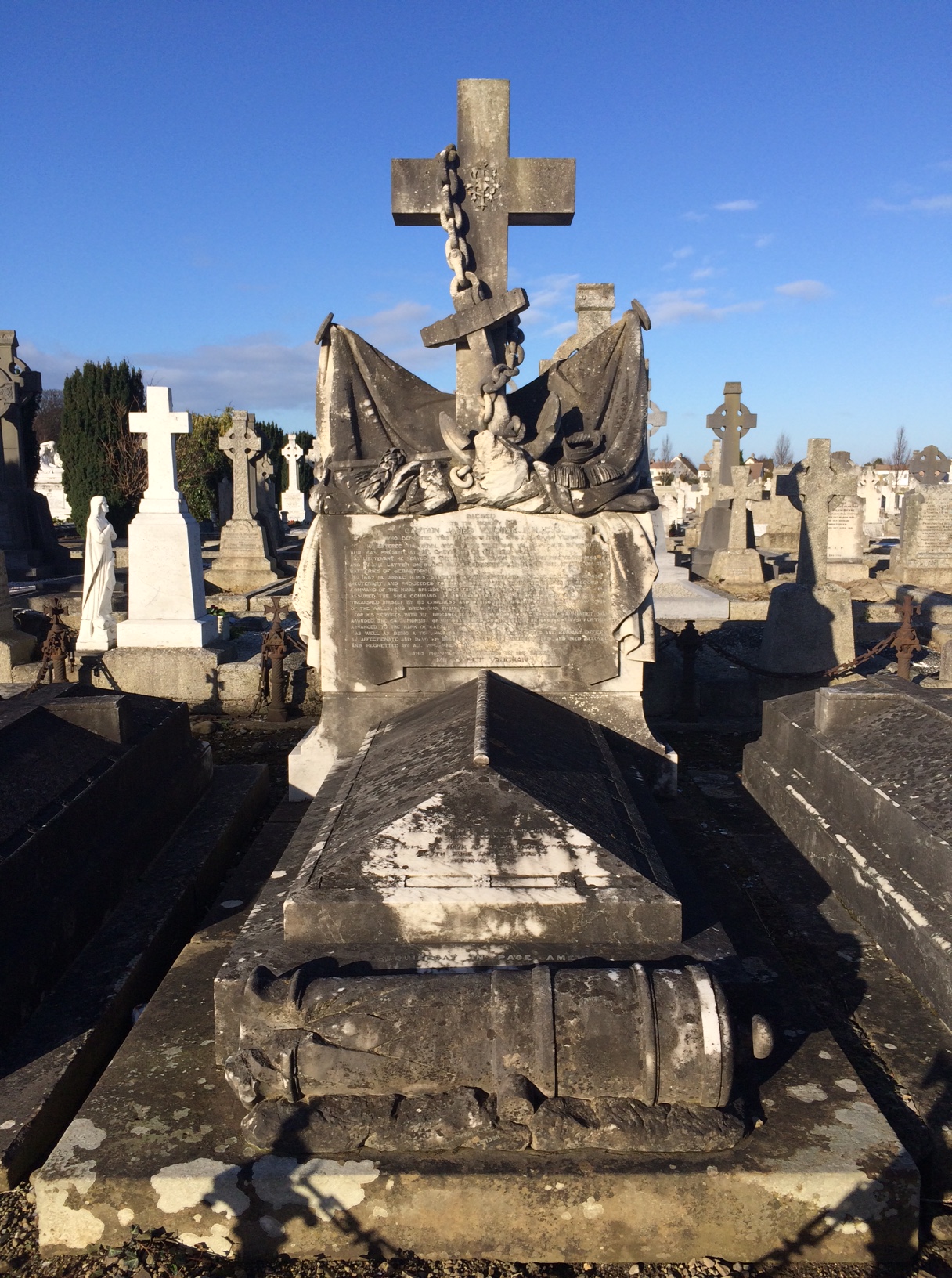
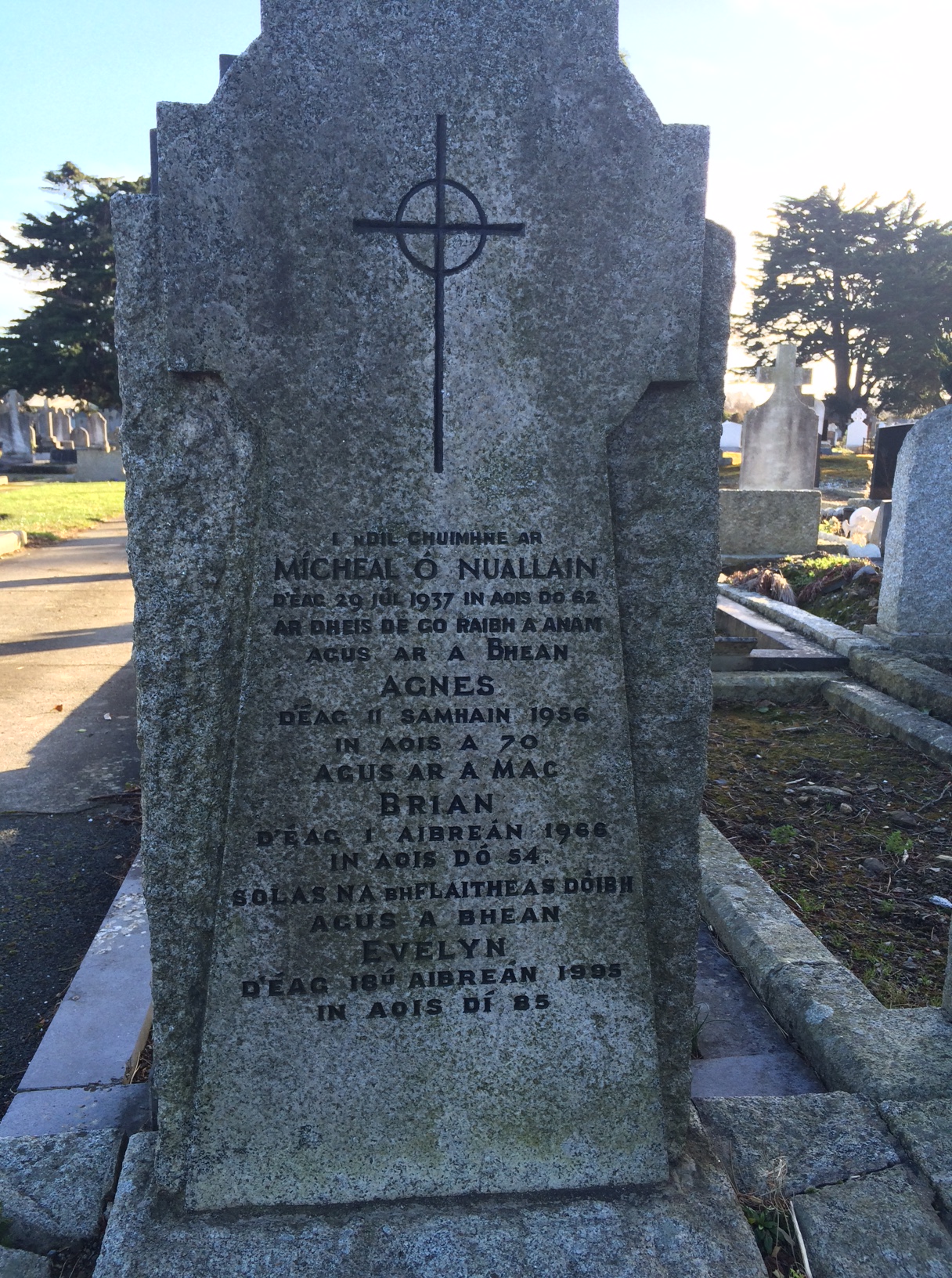
Soon, we located the church and, not long thereafter, the stone balustrade (which was grand, indeed). For the first time that morning, we were getting warm, if only in the figurative sense. From there we followed the directions given in the book, and, lo and behold, just a bit farther along, we found the modest stone of one “Brian O Nuallain” (the Irish form of the anglicized O’Nolan).

IMG_7440

Flann O’Brien. Myles na gCopaleen. Brother Barnabas. And only he knows how many others, buried there, in the humble southern shadow of the Joycean metropolis.

IMG_7430

We lingered a few minutes and snapped a few photos before moving on to our next adventure. I took one final look at the name to which the simple stone paid homage and marveled at how, in a sense, the enigmatic Flann O’Brien had so deftly eluded even Death himself.

A Pint of Plain

Guinness Storehouse
Guinness Storehouse

“When health is bad and your heart feels strange, And your face is pale and wan, When doctors say you need a change, A pint of plain is your only man.” – Flann O’Brien, “The Workman’s Friend”

I once knew an Irish girl who absolutely refused to drink Guinness this side of the pond.
“It doesn’t taste right here,” she said. “It tastes kind of funny. Sort of flat.”
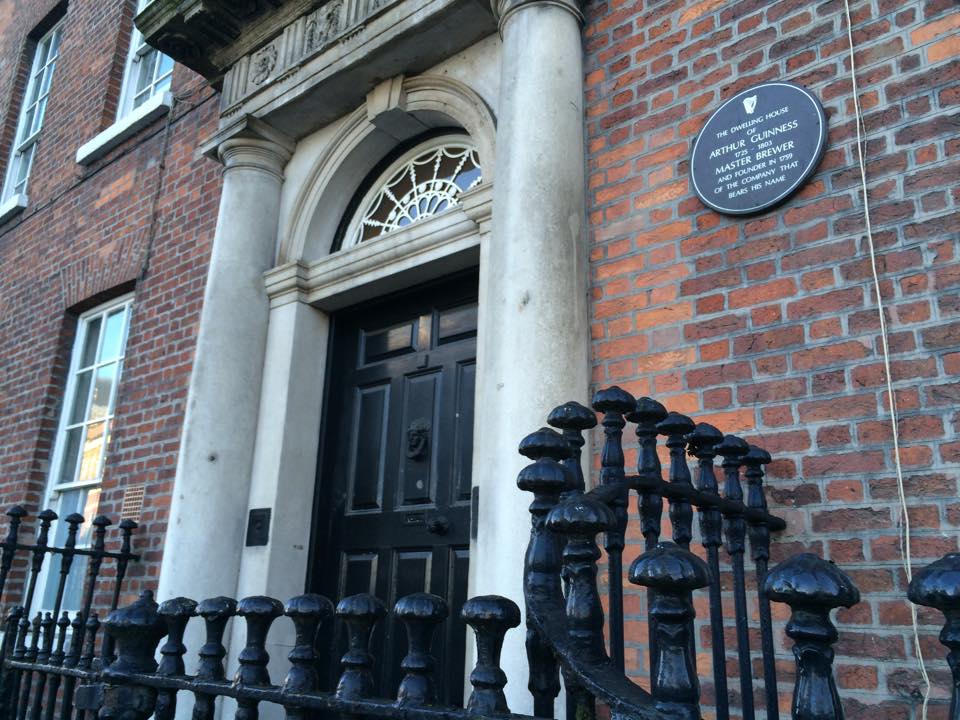
Home of Arthur Guinness
Having never been to Ireland at that point in life, I could not mount a well-rounded defense of the black stuff’s American cousin. But it hardly mattered, as said lass regularly forsook her native brew in favor of the dollar draft du jour. To me, no perceived inferiority could be so great as to justify drinking Coors Light, the skim milk of beer, thusly self-negating her own testimony.
Guinness Storehouse
Guinness Storehouse
I’ve never been a beer man, per se, preferring rambunctious, high-octane spirits like whiskey, Scotch, and rum. But I’ve always had a fondness for the vaguely sweet, burnt-but-never-bitter flavor of the Emerald Isle’s most well-known export.
Guinness Storehouse
Guinness Storehouse
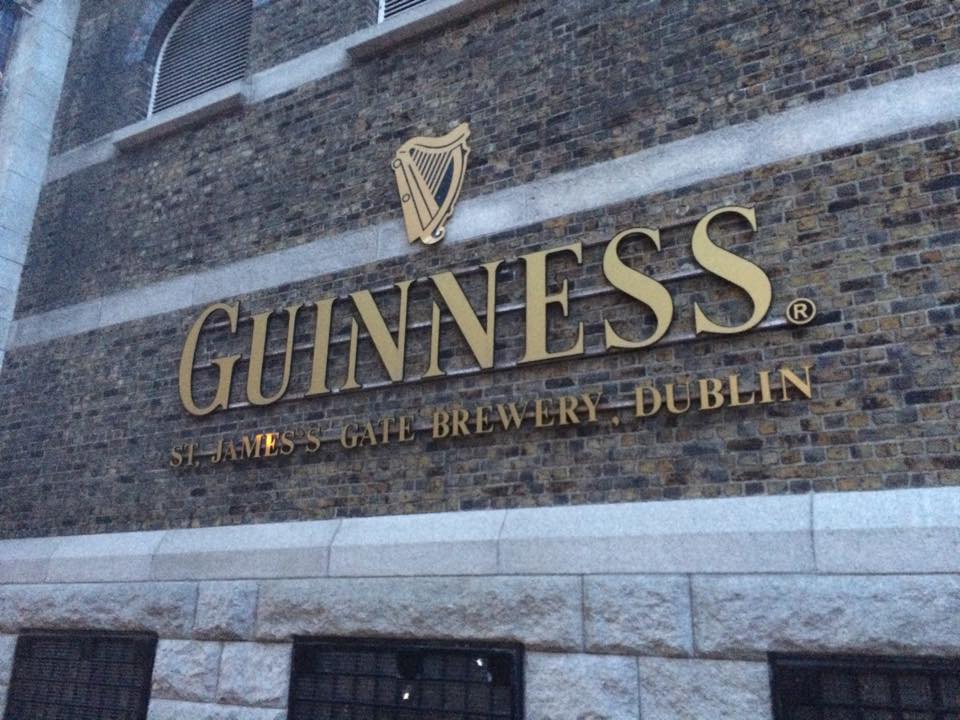
Diageo, the multinational corporate juggernaut that today owns, brews, and markets Guinness, says it annually sells more than 1.8 billion pints of it worldwide. Today, the stout is brewed in nearly 60 countries (including Ireland), and sold in twice that many, but it all began in 1759, at St. James’s Gate in Dublin.
Guinness Storehouse
Guinness Storehouse
Guinness Storehouse
Guinness Storehouse
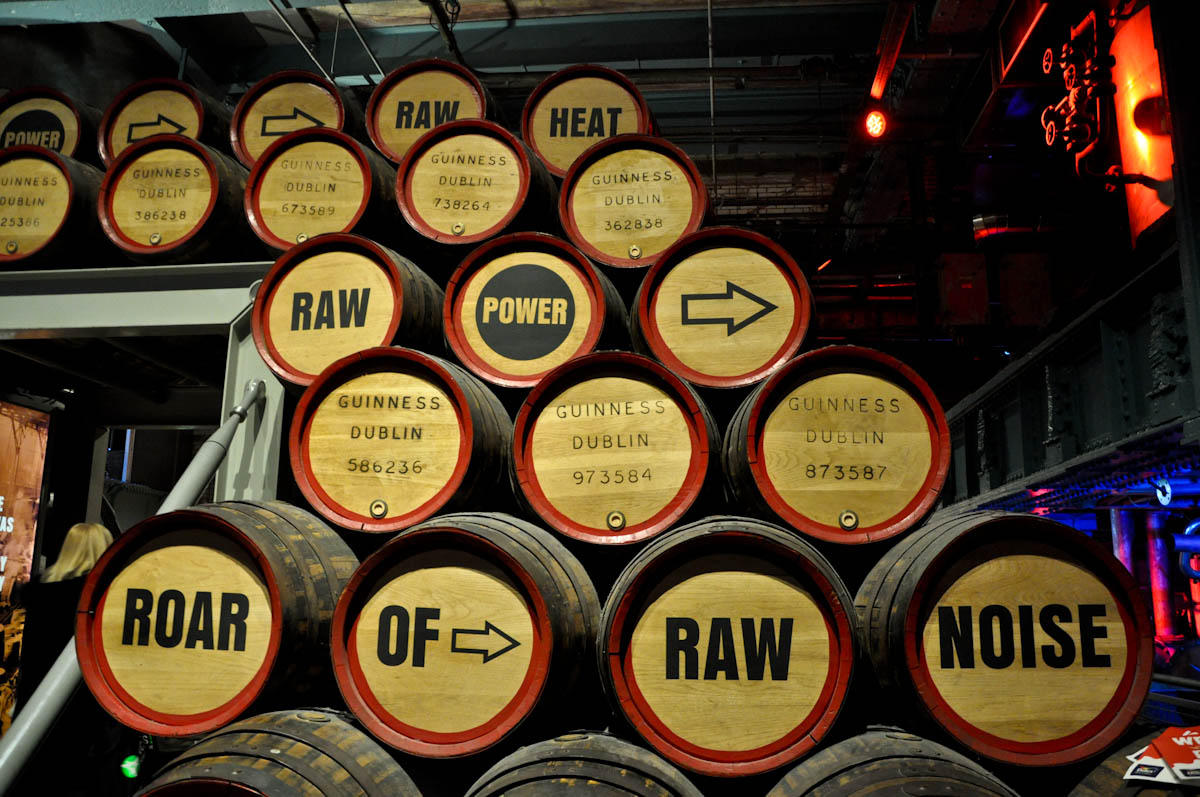
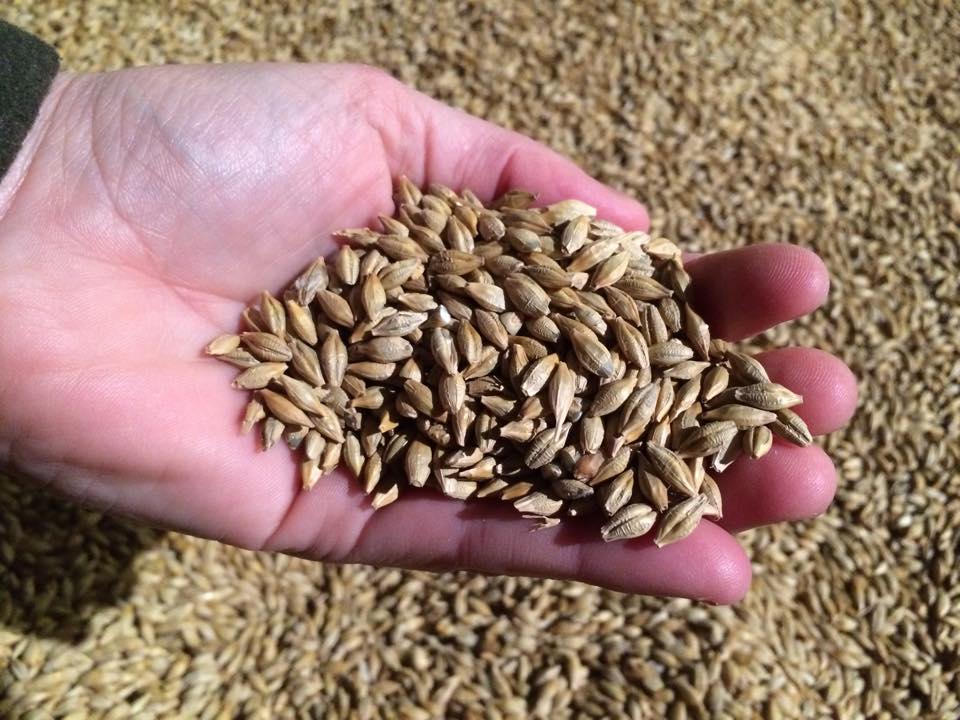
The Guinness Storehouse leaves no stone in the company’s 256-year history unturned, starting with the four ingredients that comprise its famous stout – barley, hops, yeast, and water (sourced from nearby mountains and not the River Liffey, as urban legend holds). And that’s only the first floor; the six more that ascend tell nearly every angle of the Guinness story, from the brewers to the coopers to the suits upstairs in marketing.
Guinness Storehouse
Guinness Storehouse
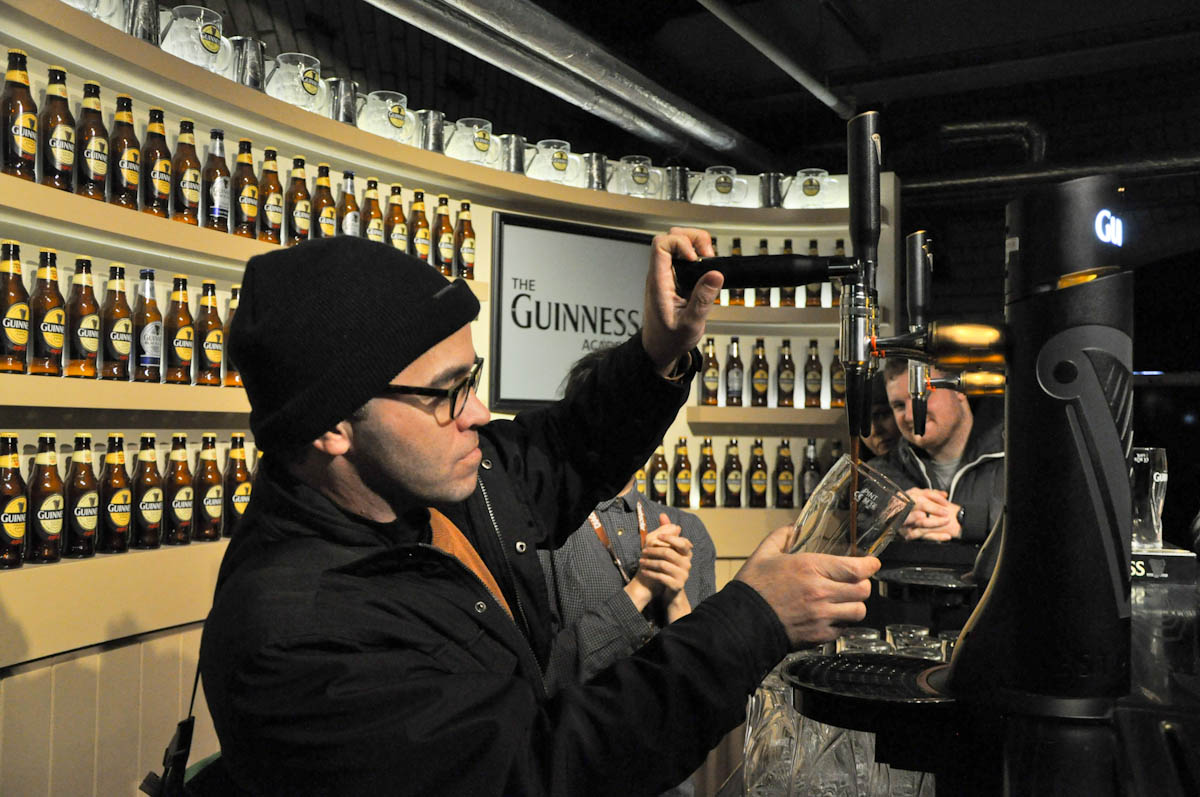
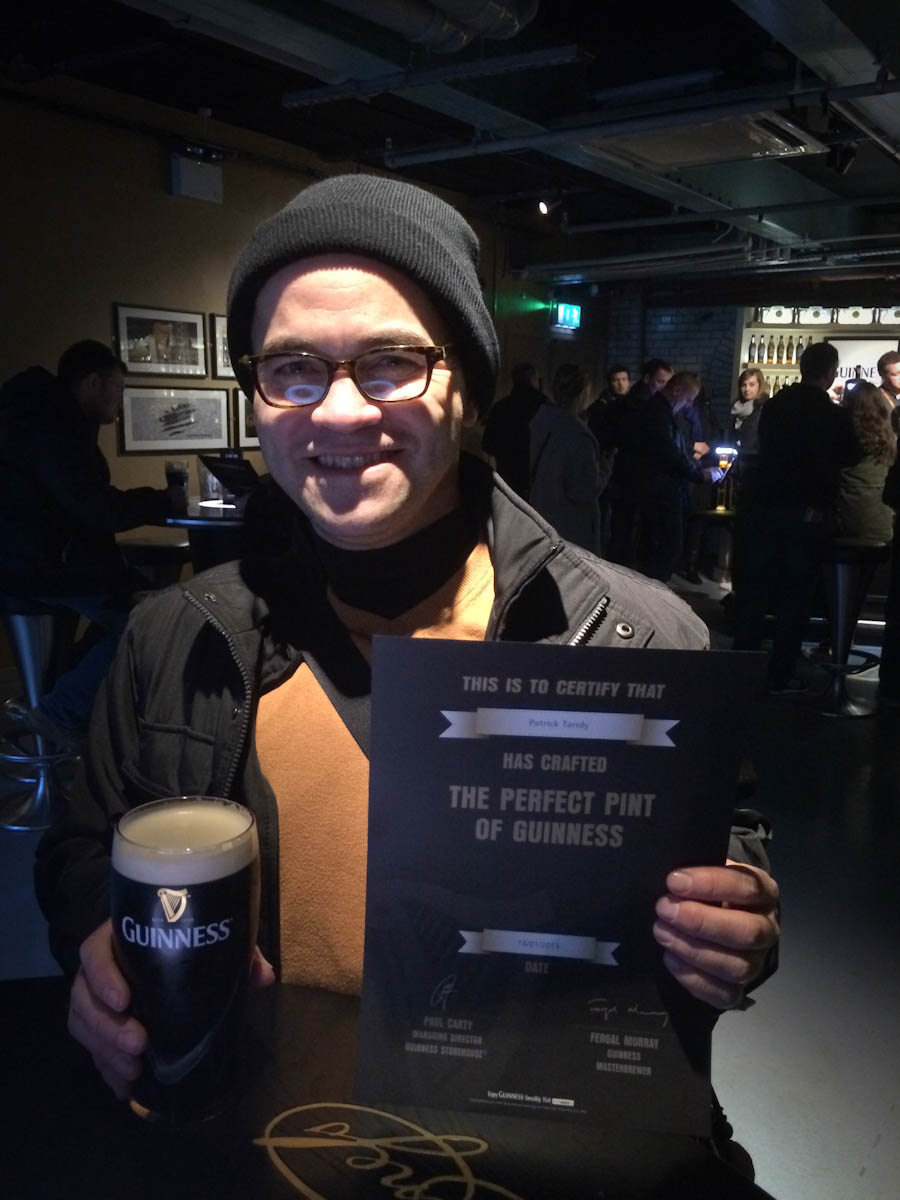
Those of drinking age (18!) can enjoy a pint (included in the admission price) on the top-floor Gravity Bar, a glass-walled cylinder that affords visitors a 360-degree view of Dublin. Another bar on the floor below teaches visitors the protocol behind a perfect pour. (TIP: Every admission stub is good for a pint, including the one your non-drinking companion is holding.)
Pouring the perfect pint, Guinness Storehouse
WPT at Guinness Storehouse
Proof that WPT crafted the perfect pint (and then drank it)
Also of note, the Guinness Storehouse is kid-friendly.
View from the top of the Guinness Storehouse
I spent an obscene amount of time and money in the gift shop (some on actual gifts), which features every manner of Guinness-branded clothing and paraphernalia. The whole deal is not inexpensive; tickets are 18 euros, or 16.20 if purchased online in advance. But for the Guinness-drinker it’s nirvana – the nexus of product and branding that defines the whole Guinness experience for people around the world.
Guinness Storehouse
Guinness Storehouse
Diageo insists that all Guinness is brewed to the same specifications, no matter where its made. But who knows? Maybe Ireland’s Guinness really is just a little more fresh, traveling through cleaner, better maintained lines to a tap that plays like a perfectly tuned instrument in the hands of a skilled barman. Or, just perhaps, a pint means that much more when enjoyed upon its native shore.
Or maybe not.
Either way, it sure as hell beats Coors Light.
Guinness Storehouse
Guinness Storehouse

If the Pipes Call, Take a Message

11004671_10204759247295547_215425634_n

Our son had called the tune when the singer invited requests. “The Rocky Road to Dublin” was the second of the boy’s picks honored that night (the first, “Galway Races”). The crowd of pensioners packing the small hotel bar in Tuesday-night Donegal took a shine to the wee lad from America with a taste for Irish tradition. It was well past 10, but the boy was fighting sleep – afraid to miss a minute.

When he reached the end of that verbose “Road”, the singer called out for more. An old lady piped up.

“‘Danny Boy’,” said she with a tone of good-natured frustration. “I’ve asked for ‘Danny Boy’ three times now.”

Like Ronald Reagan dodging questions from the press corps at the door of Air Force One, the singer pretended, for the third time, not to hear. Instead, he issued a musical plea to be taken home by way of “Country Roads”.

Go raibh maith agat, I thought, for I share his evident disdain for “Danny Boy”, the go-to anthem for every dyed beer-swilling frat boy in a green plastic derby, the obligatory sendoff for every ward-boss before he’s planted in the ground. Ironically, this insufferably sappy tune – held dear by Irish communities around the world – was, in fact, penned by an Englishman. These traits, when juxtaposed with the infinite canon of fine Irish music new and old (or even the John Denver catalogue), permit no justifiable cause for suffering “Danny Boy”.

Frankly, I just don’t get it.

Though often reduced to drunk and downtrodden caricature, Irish music is, in fact, rife with a kind of exuberance that is at once comic and tragic, and it often employs a dark, inherent brand of humor which, at its best, may be equitably applied to both cirrhosis and the RIC.

“It’s not that the Irish are cynical,” author Brendan Behan once noted. “It’s rather that they have a wonderful lack of respect for everything and everybody.” Behan certainly fit that bill, as did his brother, Dominic. The latter, himself an author, singer, and songwriter, had a paradoxical sensibility that could at once convey humor and sorrow, loyalty and insolence. It fully manifests in his recording of the jaunty “A Grand Old Country”, written by the Behan boys’ uncle, renowned rebel songwriter Peadar Kearney:

We’ll pray for mother England while I’m waiting on the day
I’ll pray for mother England ’til I’m blind and bald and grey
I’ll pray that I and she may die, and drown that she may drown
And if ever she tries to lift her head I’ll be there to push it down

But Behan is but one voice in a musical oeuvre that includes Planxty, the Dubliners, the Wolf Tones, the Clancys and Tommy Makem (who introduced the world to Irish music), but also Enya, Thin Lizzy, The Cranberries, Van Morrison…to name very few.

Just not U2, who might be the only humorless lot in the bunch.

I don’t know if the old lady’s request was ever fulfilled, as the craic was still going full bore when we retired for the night. But it was not the last we saw of her. The next morning, we crossed paths in the hotel lobby. She and a friend of similar age engaged our son with a few friendly words, and complimented us on his conduct. Many Irish, we observed throughout our travels across the Emerald Isle, seem to have a soft spot for children.

Maybe that explains “Danny Boy”?

Among The Little People Now

National Leprechaun Museum, Dublin

Between the holdover time in Boston, the duration of the flight, and the five-hour time difference, we were thoroughly exhausted by the time we reached Clontarf Castle. Nevertheless, figuring our best bet for acclimating to local time was to forge on until bedtime, we checked in, threw down our bags, and after a short rest were off for Dublin Town.

Traveling with a 9-year-old (who’d held up amazingly well thus far) meant that our first stop should be of correlative interest. And so it was that we found ourselves at the door of the National Leprechaun Museum. Despite the hokey implications of its name, the Museum could be as easily marketed as a crash course in Irish mythology – Aos Sí 101 – which manifests throughout Irish culture to this day.

11015403_10204746698981847_1554666426_n
National Leprechaun Museum, Dublin

As our seanchai led us through a series of exhibits depicting leprechauns of lore as well as their modern convention (rooted in the 1959 Disney film, Darby O’Gill and the Little People), elaborating upon the púca and bean sídhe, Fionn mac Cumhaill and the Fenian Cycle, I recalled, of all things, one Friday night in high school, when a friend and I drove a half-hour to see Schindler’s List. However, we faltered at the ticket window. Were we, a pair of strapping lads perched at the precipice of the weekend, really up to facing three-hours of celluloid-induced depression?

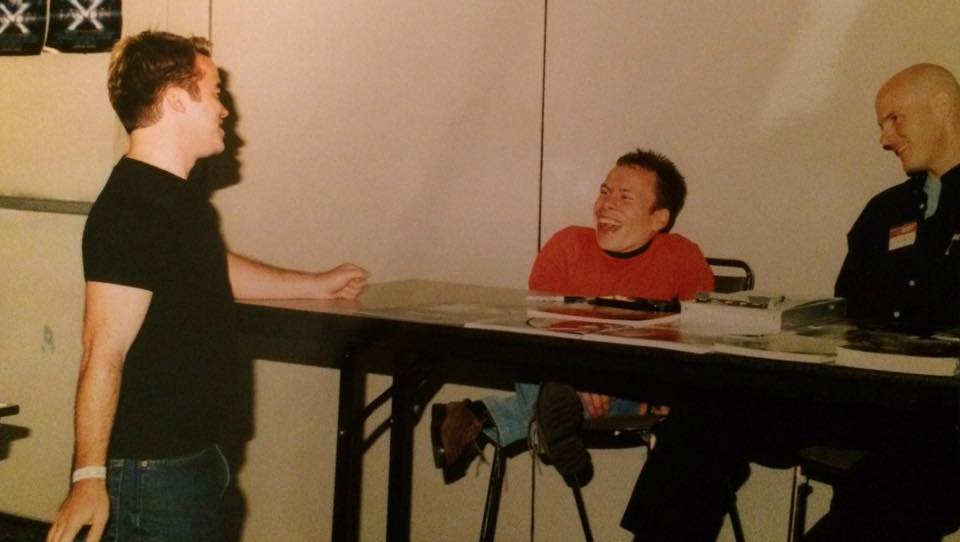
Indeed, common sense prevailed, and we blew off the Oscar-winning Holocaust epic in favor of seeing Leprechaun 2 (which happens to contain one of the most hilariously inconsistent nude body-doubles ever committed to film, but that’s another story). I related this tale to Warwick Davis (who plays the namesake leprechaun) a decade later at a horror-con in Baltimore. His reaction belied an unparalleled sense of diplomacy.

William P. Tandy regaling Warwick Davis with his cinematic preferences

But back to the matter at hand. A noteworthy gift shop awaits visitors at the end of this rainbow. However, a word of note: although the National Leprechaun Museum is indoors, there seemed to be no source of heating, so should you go there in January, dress accordingly.

11008954_10204746698821843_1208744226_n
National Leprechaun Museum, Dublin
10961781_10204746698861844_1058248962_n
National Leprechaun Museum, Dublin

Thank God We’re Surrounded by Water

Clontarf Castle
Clontarf Castle

Davida and I first crossed paths with Bram Stoker in January 2000, on the moors of North Yorkshire. With daylight bleeding out and many miles till Edinburgh, we arbitrarily decided to seek lodging in a brooding little waterfront town on the North Sea.

It was by chance, for us, that Whitby bears the literary distinction of being the point at which Stoker deposited his greatest creation, Count Dracula, on Albion shores. Although I had read Dracula, it had been many years since, and I had no recollection of the town or its role in the novel. However, this connection, we soon learned, has made Whitby, with its lurid tourist draws and ruined cliff-top abbey overlooking the sea, the Coney Island of goth culture that it is today.

We still travel this way – every January, often spending the night wherever the day has taken us. Ireland in the off-season, we figured, would be no exception. In fact, when planning our January 2015 road trip of the Emerald Isle, we had booked lodging for only one of our seven nights – the first, not far from Dublin Airport.

11015161_10204723941292919_2144134601_n
Clontarf Castle


Online, Clontarf Castle had appeared a bit more upscale than our usual digs, but we figured some comfortable sprawling room might be in order following a full day and night of travel; plus, our son would enjoy the prospect of spending his first night abroad in a castle.

Clontarf Castle
Clontarf Castle

Now an affluent suburb on the north side of Dublin, Clontarf was, a thousand years ago, the site of an epic battle that in the annals of Irish history commands a hallowed status comparable to that of, say, Gettysburg for Americans. It was here, in 1014, that Irish Ard Ri (or high king) Brian Boru defeated a joint force of Viking marauders and contentious Irish factions from the kingdoms of Dublin and Leinster. Nearly every commander on all sides , including Brian, died that April 23 – Good Friday – but the bloody Battle of Clontarf effectively ended 200 years of Viking raids in Ireland. Unfortunately, with Brian’s death, it also spelled the end of the fragile alliance between various Irish clans that he had spent a lifetime crafting, setting the stage for socio-political unrest that would pave the way for invading Normans in 1169.

Battle of Clontarf
Battle of Clontarf

In the 1960s, songwriter Dominic Behan (brother of author and playwright Brendan Behan) poetically summarized the Battle of Clontarf in his oft-covered tune, “The Sea Around Us”:

The Danes came to Ireland with nothin’ to do
But dream of the plundered old Irish they slew
“Yeh will in your Vikings,” says Brian Boru
As he pushed them back into the ocean

Those combatants would recognize nothing of Clontarf today…save, perhaps, for nearby Dublin Bay. However, the extant Clontarf Castle, which dates (only) to the 19th century, might be a familiar sight for the area’s most renowned native son – one Abraham Stoker, born here in 1847, at the height of the Great Famine. Fifty years later, Stoker would turn loose upon the world one of the most enduring icons of gothic horror with the publication of his magnum opus, Dracula.

Bram Stoker's childhood home
Bram Stoker’s childhood home

While I knew Bram Stoker was Irish by birth, I could not have told you his particular place of origin – that was, until Clontarf, where, to our mutual astonishment, we once again found ourselves in his presence. Fifteen years and who-know-how-many-thousands-of-miles had found us on the very grounds of the ruined church in which he had been baptized, and but a short walk from his birthplace. Indeed, it was enough to render the most rational mind superstitious.

But that could be said for much of Ireland – and this was only the beginning…

So Goes the Story

With a small fortune of highly refined poison coursing through my veins, I listened to Davida promise that one day, once I was better, she would take me to Ireland, fulfilling my lifelong dream. The year was 2007, and I was in the midst of hard-hitting chemotherapy for non-Hodgkin’s lymphoma. We had just celebrated our son’s first birthday.

Ireland--12


It goes without saying, thankfully, that I lived to tell the tale – and, thanks to Davida’s perseverance, see the land of my forebears.

I’m more Irish than anything. While my mother’s family is an amalgam of English and German ancestry, my father’s side is Irish through and through. My paternal grandfather’s branch of the family tree stems from late-18th century Irish revolutionary Napper Tandy. Also a sympathizer of the French Revolution, the Dublin Protestant aligned himself with Napoleon Bonaparte, who at the turn of the 19th Century was the best bet running for anyone with a British bone to pick.

Though less well known today than contemporaries like Wolfe Tone, old Napper did achieve a certain level of immortality by way of “The Wearing of the Green”, a traditional folksong that recalls the Irish Rebellion of 1798:

I met with Napper Tandy and he took me by the hand
And he said, “How’s poor old Ireland, and how does she stand?”
“She’s the most distressful country that ever yet was seen
For they’re hanging men and women for the wearing of the green.”

10979356_10204693845980555_2081987159_n

I do not yet know at what point the New World Tandy contingent crossed the pond. But I do know that four generations later, my father’s maternal grandfather, another Dubliner by the name of Daniel Desmond, stood to inherit his family’s farm – an enterprise in which, so the story goes, young Daniel wanted no part. And so it was that he, like so many Irish throughout the century following the Great Famine, cast his sights westward, toward “The Shores of Americay”.

The Tammany-run New York of the late-1800s was rife with opportunity for an enterprising young Irishman just off the boat. Or so my old man – born a decade after Daniel’s death – believes, as within just a few years, his grandfather went from poor immigrant kid to owner of a saloon in the Wall Street District.

Or so goes the story. Which is something I’ve always loved about the Irish: their deep-seated oral tradition, the lyrical tales whose fire-lit origins are as vague and elusive as the ubiquitous ruins that pepper the Hibernian landscape. And yet to this day, like those moss-covered monoliths, they persist – integral yarns in the cultural fabric. They live on in the artistry of the modern seanchaithe – authors and actors, musicians and playwrights – as well as in the lives of everyday women and men.

Fortunately, my own “Troubles” came and went. I was healthy once again – more so, in fact, than I’d been for many years leading up to the cancer – and Davida, hell-bent on making good on her promise, continued to sock money away for our epic journey-in-waiting. The only thing holding us back was the age of our son; he had to be both old enough to appreciate such an experience and sufficiently strong to withstand our at-times frenetic pace…

In January 2015, on the eve of his ninth birthday, that time, we felt, was finally upon us.

Ireland-0020

Irish Snack Foods

(Or Fine Dining on the Motorway)

We at Next Exit Travel are curious about local cuisine. For us, this means stopping at various supermarkets and gas station mini-marts to sample local delicacies. We seek to experience the potato in all forms. In fact, that really should be our mission statement.

Several of the gas station mini-marts offered fresh fruits and vegetables, as well as bread baked fresh on the premises. But you all know what bread looks like and snack food packaging is so much more fun. We also found out there is an amusement park devoted to fried potato products – Tayto Park! It was closed for the winter, but it gives us an excuse to go back.

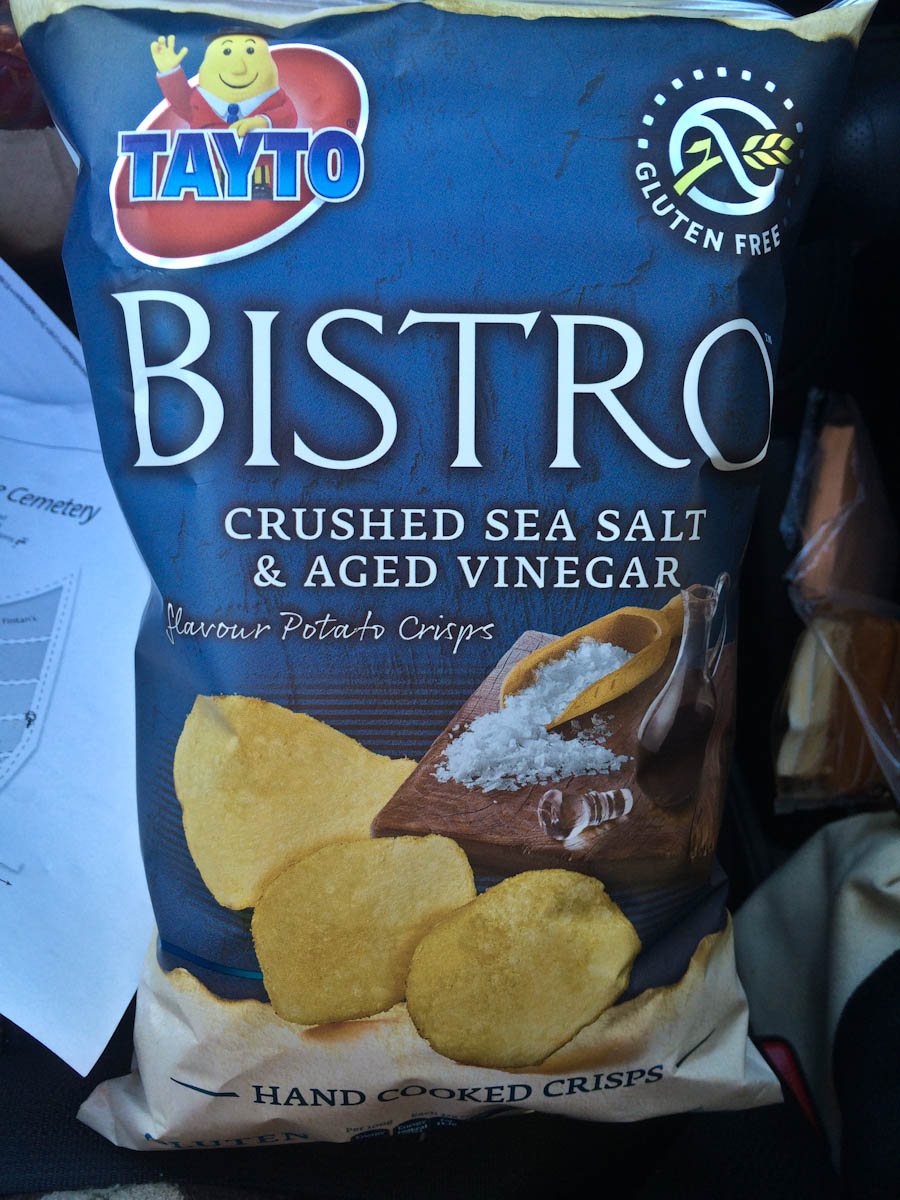
Ireland-4451
I could probably live on salt & vinegar chips. This was a good one.
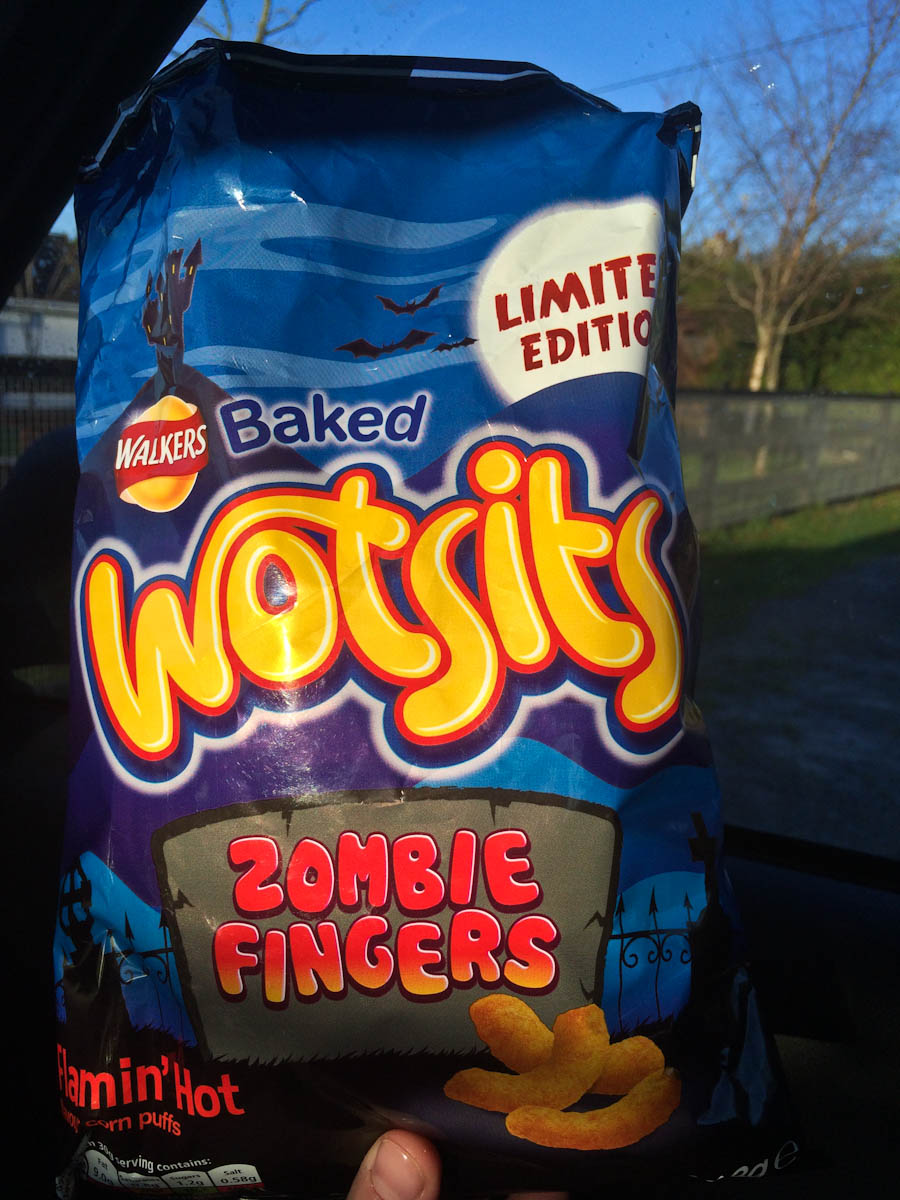
Ireland-4480
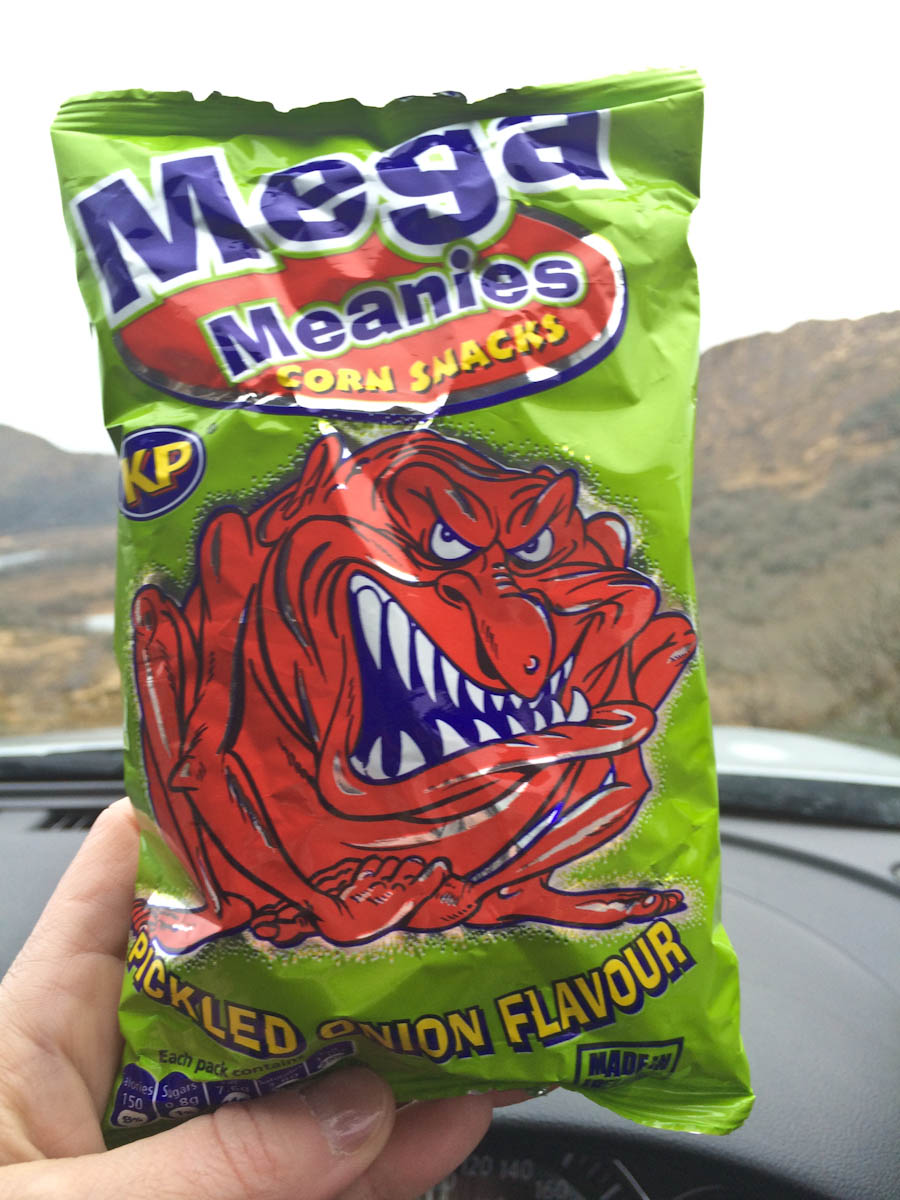
These were vegan and since they were baked they were practically a health food. And nothing beats the comedy of asking someone in the car where the zombie fingers went.
Ireland-4484
Yes, the cashier did look at us a bit funny.
Ireland-4492
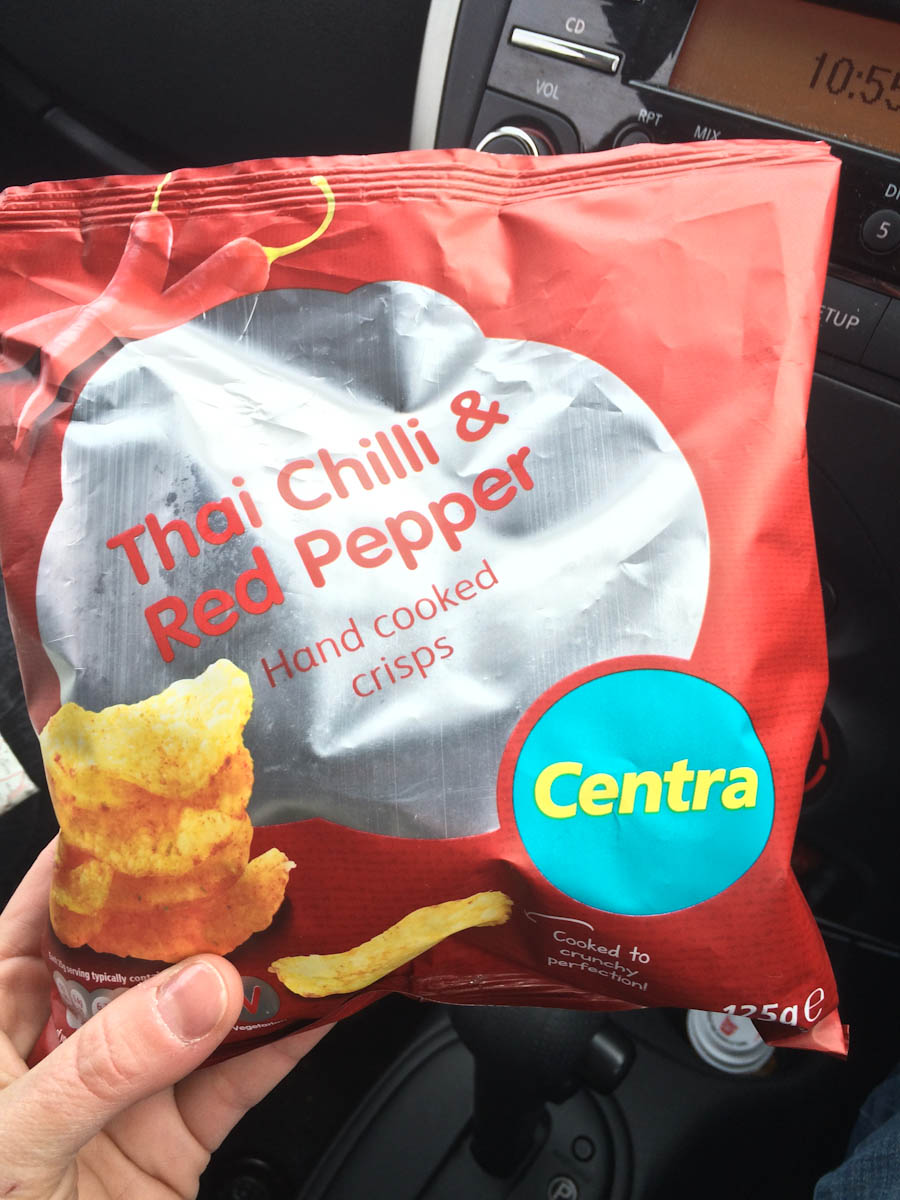
Could have been a bit spicier, but were a nice change.
Ireland-4494
I can’t remember what these had in them, wheat I think, so I didn’t try them, but WPT ate the whole bag rather quickly.
Ireland-4636
I loved these. They were like the love child of salt & vinegar and garlic & onion chips.
Ireland-4770
I’m saving these for a special occasion.
Ireland-4771
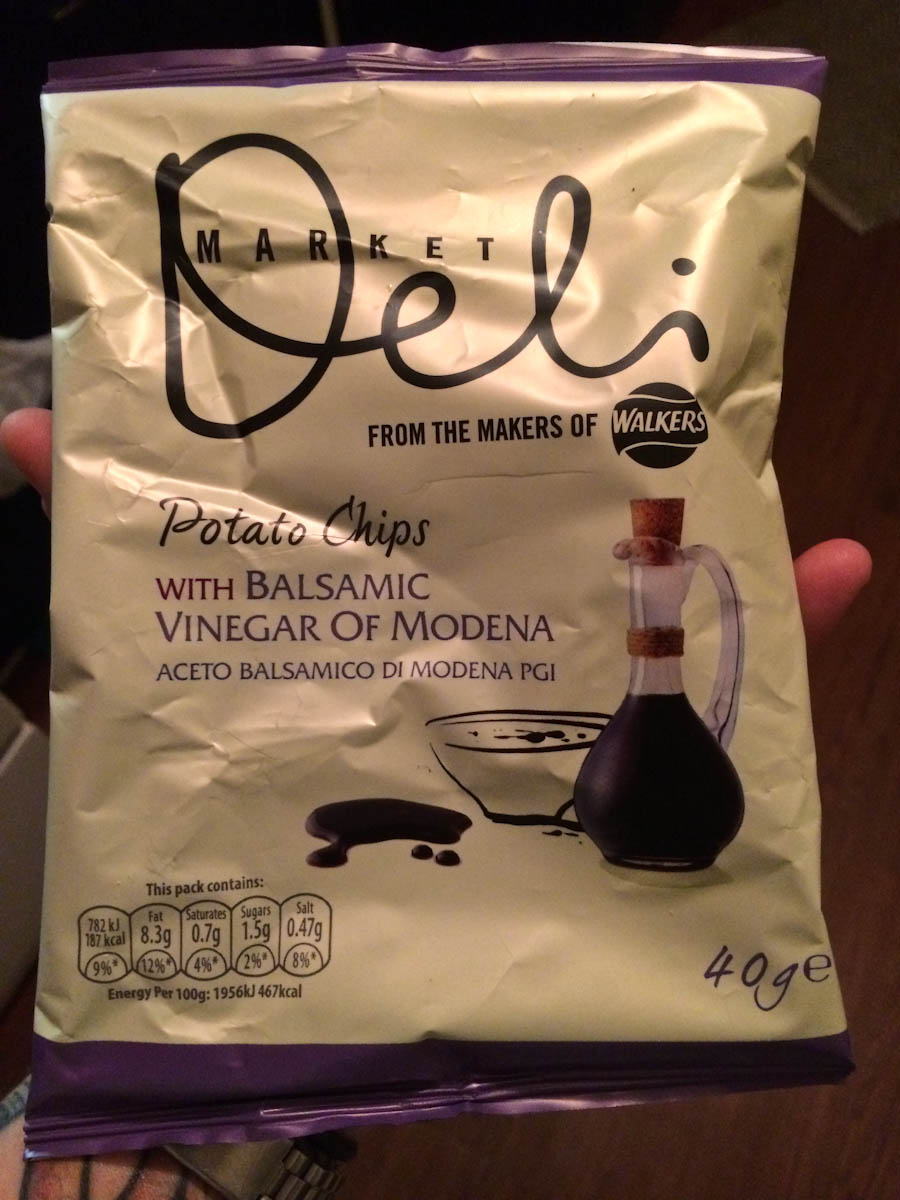
Just the right mix of salt and vinegar.